
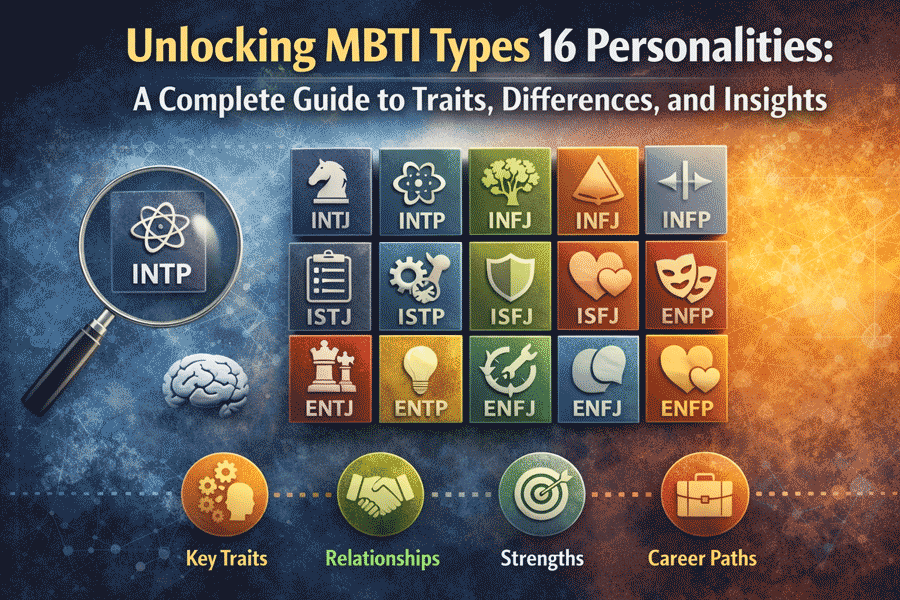
Understanding the mbti types 16 personalities is more than just memorizing four-letter codes; it is about unlocking a framework for self-awareness and interpersonal effectiveness. While many people encounter the Myers-Briggs Type Indicator as a casual quiz, its true value lies in understanding the cognitive machinery that drives behavior. If you are looking to move beyond surface-level stereotypes and grasp why you think, feel, and act the way you do, this guide provides the depth you need. The core conclusion is simple: the four letters are merely a map, but cognitive functions are the terrain. To truly apply mbti types 16 personalities in your life, you must return to the underlying psychological preferences that define how you process information and make decisions.
This article is designed for English-speaking readers who are serious about personal development. Whether you are trying to confirm your own type, improve communication with a partner, or find a career path that aligns with your natural strengths, understanding the mechanics behind the types is essential. We will explore the Jungian roots of the system, explain why letter-based typing often leads to mistakes, and provide practical frameworks for growth. By the end, you will have a robust toolkit for using personality theory not as a label, but as a dynamic guide for lifelong development.
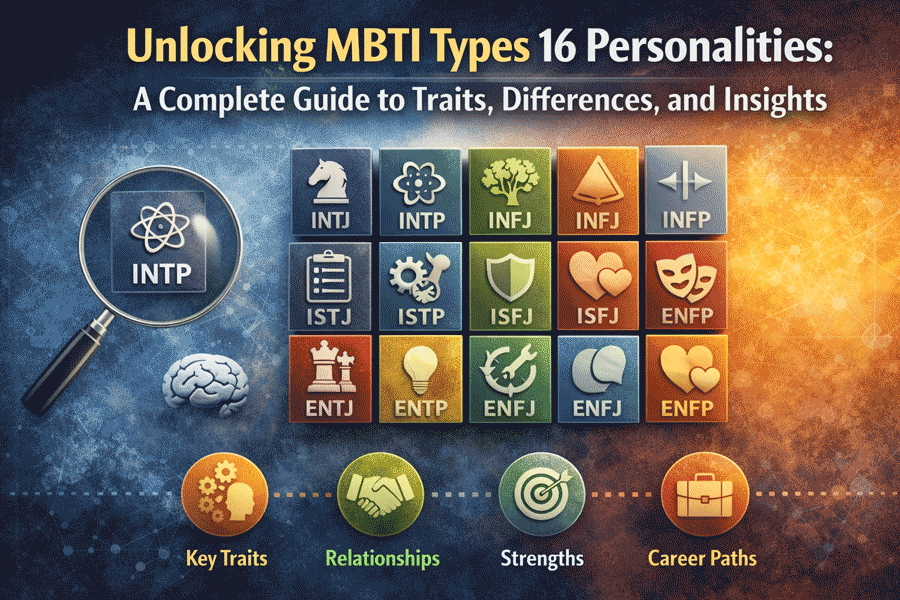
The Framework Behind MBTI Types 16 Personalities
To understand mbti types 16 personalities, we must first look at the foundation. The MBTI is based on Carl Jung's theory of psychological types, which suggests that human behavior is not random but follows predictable patterns based on innate preferences. These preferences are organized into four dichotomies, which combine to create the 16 distinct types. However, the dichotomies are just the surface layer. The real engine of personality is the cognitive function stack.
The Four Dichotomies
The MBTI sorts preferences into four pairs. Understanding these is the first step, but relying on them alone is where most people get stuck.
- Extraversion (E) vs. Introversion (I): This describes where you direct your energy. Extraverts tend to recharge through interaction with the outer world, while Introverts recharge through solitude and internal reflection. It is not about being social or shy, but about energy source.
- Sensing (S) vs. Intuition (N): This describes how you take in information. Sensors focus on concrete details, present realities, and practical experiences. Intuitives focus on patterns, future possibilities, and abstract connections.
- Thinking (T) vs. Feeling (F): This describes how you make decisions. Thinkers prioritize logic, objective criteria, and consistency. Feelers prioritize values, harmony, and the impact on people.
- Judging (J) vs. Perceiving (P): This describes how you approach the outside world. Judgers prefer structure, plans, and closure. Perceivers prefer flexibility, openness, and keeping options available.
The Cognitive Function Stack
The true power of mbti types 16 personalities emerges when you understand cognitive functions. Each type uses four main functions in a specific order: Dominant, Auxiliary, Tertiary, and Inferior. These functions are either perceiving functions (how you gather information) or judging functions (how you make decisions).
Perceiving Functions:
- Se (Extraverted Sensing): Focuses on immediate physical reality, action, and sensory experiences. High Se users are often spontaneous and aware of their environment.
- Si (Introverted Sensing): Focuses on past experiences, stability, and detailed recall. High Si users value tradition, routine, and reliability.
- Ne (Extraverted Intuition): Focuses on brainstorming, multiple possibilities, and connecting disparate ideas. High Ne users are often innovative and adaptable.
- Ni (Introverted Intuition): Focuses on future vision, singular insights, and underlying meanings. High Ni users are often strategic and focused on long-term goals.
Judging Functions:
- Te (Extraverted Thinking): Focuses on external efficiency, organization, and objective logic. High Te users value productivity and clear structures.
- Ti (Introverted Thinking): Focuses on internal consistency, precision, and understanding systems. High Ti users value accuracy and logical integrity.
- Fe (Extraverted Feeling): Focuses on group harmony, social values, and interpersonal connection. High Fe users value consensus and maintaining relationships.
- Fi (Introverted Feeling): Focuses on internal values, authenticity, and personal ethics. High Fi users value being true to themselves and deep emotional understanding.
For example, an INTJ leads with Ni (vision) and supports it with Te (execution). An ENFP leads with Ne (possibilities) and supports it with Fi (values). Understanding this stack explains why two types might share letters but behave very differently. This depth is crucial for accurate type confirmation and avoiding mistypes.
Why Letter-Based Typing Causes Mistakes
Many people mistype because they answer test questions based on their current behavior rather than their innate preference. Stress, culture, and job requirements can mask your true type. For instance, an Introvert working in sales may develop strong social skills, appearing Extraverted. However, they still drain energy from social interaction, whereas a true Extravert gains energy. Similarly, a Thinker may value harmony highly due to upbringing, but their default decision-making process remains logical. This is why validating your type requires self-observation of decision patterns, stress reactions, and motivation, rather than relying solely on test results. Tests are a starting point, but cognitive function analysis is the verification method.
Practical Application Frameworks
Knowing your type is useless without application. Here are two practical frameworks to use mbti types 16 personalities for tangible improvement in career and relationships.
Framework 1: Career and Work-Style Fit
When it applies: This framework is useful when choosing a career path, negotiating work responsibilities, or managing team dynamics. It helps align your daily tasks with your cognitive strengths.
Which type dynamics it relates to: This relates heavily to the Judging functions (Te/Ti/Fe/Fi) and how you prefer to execute tasks. For example, Te users thrive in structured environments with clear metrics, while Ti users prefer autonomy to solve complex problems.
Practical Action Steps:
- Audit Your Energy: Track which tasks drain you and which energize you over two weeks. Look for patterns related to your functions. If you are an Ne user, do you feel stifled by repetitive data entry?
- Align Roles with Functions: If you are high in Fe, seek roles involving team coordination or client relations. If you are high in Ti, seek roles involving analysis, engineering, or strategy.
- Communicate Needs: Use type language to explain your working style to managers. For example, a Perceiving type might request flexible deadlines in exchange for high-quality output.
Benefits and Limitations: The benefit is increased job satisfaction and productivity. The limitation is that no job fits perfectly; you will always need to use non-preferred functions. Use this framework to maximize strengths, not to avoid all challenges.
How to judge fit: If you feel constantly exhausted despite having the skills for the job, your work style may conflict with your type. If you feel in a state of flow often, the fit is likely good.
Framework 2: Relationship and Communication Guidance
When it applies: Use this when conflicts arise with partners, family, or colleagues. It helps decode why someone communicates differently than you.
Which type dynamics it relates to: This relates to the interaction between different function stacks. For example, an Fi user may need emotional validation, while a Te user may offer solutions instead of empathy.
Practical Action Steps:
- Identify Communication Styles: Determine if the other person prefers direct logic (T) or values-based discussion (F). Determine if they prefer big picture (N) or specific details (S).
- Translate Your Message: If speaking to an Si user, provide concrete examples and history. If speaking to an Ne user, focus on future possibilities and concepts.
- Respect Energy Needs: Allow Introverts time to process before expecting a response. Allow Extraverts to talk through ideas aloud.
Benefits and Limitations: This reduces friction and misunderstanding. However, do not use type as an excuse for bad behavior. MBTI compatibility is not about finding a perfect match, but about understanding differences.
How to judge fit: If conversations feel like pulling teeth, you may be speaking different cognitive languages. Adjusting your approach should make interactions smoother.
The Path to Personality Growth
Growth is the ultimate goal of studying mbti types 16 personalities. It is not about changing who you are, but about becoming a more flexible and integrated version of yourself.
Identify the Dominant Function First
Your dominant function is your superpower. It is where you are most natural and confident. Growth starts by leveraging this strength. For example, if you are an INFP, your dominant Fi means you have deep values. Use this to guide your life choices rather than suppressing it to fit in. Strengthening your dominant function gives you the stability needed to develop weaker areas.
Distinguish Preference from Skill
A common misconception is that preference equals skill. You may prefer Thinking, but that does not mean you are logically smart. You may prefer Feeling, but that does not mean you are emotionally intelligent. Skill is developed through practice. Recognize that you can learn to use non-preferred functions effectively, even if they feel less natural. This distinction prevents complacency.
Develop the Inferior Function Gradually
The inferior function is your blind spot and your source of growth. It is the opposite of your dominant function. For an INTJ (Ni-dom), the inferior function is Se (sensory experience). Under stress, an INTJ might overindulge in sensory pleasures or become hyper-aware of physical details. Healthy growth involves integrating this function gently. An INTJ might benefit from mindfulness, sports, or engaging with the physical world without overanalyzing it. Do not try to flip your personality; instead, add tools to your toolkit.
Explain Loop and Grip Patterns
Under stress, types can fall into unhealthy patterns. A loop occurs when you bypass your auxiliary function and oscillate between your dominant and tertiary functions. For example, an INFJ (Ni-Fe) might loop between Ni and Ti, becoming isolated and overly critical. A grip occurs when you are overwhelmed by your inferior function. An ESTJ (Te-dom) in a grip might become emotional and irrational (inferior Fi). Recognizing these states helps you return to balance. If you notice yourself in a grip, prioritize rest and return to your dominant function's strengths.
Growth Means Flexibility, Not Identity Attachment
Do not attach your identity so rigidly to your type that you refuse to grow. Saying I am a Perceiver so I cannot be punctual is a limitation, not a truth. Personality growth means expanding your capacity to handle different situations. Use your type as a map for where you need to stretch, not as a cage that defines your limits.
Common Mistakes and Pitfalls
To ensure you use mbti types 16 personalities effectively, avoid these eight common pitfalls. Each point includes a better alternative mindset.
- Don't treat type as a horoscope. MBTI is about preferences, not destiny. Do not assume your type dictates your fate. Alternative: View type as a set of default settings that you can override with effort.
- Don't stereotype others. Assuming all Thinkers are cold or all Feelers are irrational is harmful. Alternative: Curiously explore how an individual's unique history shapes their expression of their type.
- Don't use type to excuse bad behavior. Saying I am a Perceiver so I am late is irresponsible. Alternative: Acknowledge your preference but take responsibility for the impact of your actions on others.
- Don't obsess over typing others. Trying to label everyone you meet creates distance. Alternative: Focus on understanding your own type first; let others reveal themselves over time.
- Don't ignore the context. Behavior changes based on environment. A quiet Extravert in a library is still an Extravert. Alternative: Look for energy patterns over time rather than single instances of behavior.
- Don't value one type over another. No type is better. Each has strengths and weaknesses. Alternative: Appreciate the diversity of cognitive styles in a team or relationship.
- Don't rely on memes and social media. Online content often exaggerates traits for humor. Alternative: Seek credible resources and books for accurate information.
- Don't stop learning. Typing is not a one-time event. You may refine your understanding as you mature. Alternative: Re-evaluate your type every few years as you gain life experience.
Continuing Your Learning Journey
The field of personality psychology is evolving. To maintain accuracy and depth, encourage yourself to keep following new research and higher-quality resources. Credible organizations like the Myers & Briggs Foundation and CAPT (Center for Applications of Psychological Type) provide authoritative information. Jungian educational resources also offer deep dives into the theoretical roots. Be wary of low-quality summaries that reduce complex theories to buzzwords. Engage with debates and newer interpretations, such as the integration of MBTI with Big Five traits, to get a rounded view. Learning to identify reliable information is a skill in itself. Look for authors who cite sources, acknowledge limitations, and avoid absolute claims. By staying informed, you ensure that your use of mbti types 16 personalities remains grounded in science and utility rather than pop psychology.
Frequently Asked Questions
Here are answers to common questions to help you navigate your journey with confidence.
1. Where should a beginner start with MBTI?
Start by reading about the cognitive functions rather than just the 16 type descriptions. Understanding functions like Ni or Te gives you the vocabulary to understand why types behave the way they do. Take a reputable test as a baseline, but do not treat the result as final. Observe your own reactions to stress and energy drains.
2. How can I confirm my type without tests?
Focus on type confirmation through self-observation. Ask yourself: What drains my energy? How do I make decisions under pressure? What do I value most? Compare your internal experience with function descriptions. Seek feedback from people who know you well, but filter their opinions through your own self-knowledge.
3. How does MBTI help with relationship communication?
It highlights differences in decision-making style and information processing. If you know your partner prefers Sensing, you know to give concrete details. If they prefer Feeling, you know to acknowledge emotions before solving problems. This reduces friction and increases empathy.
4. What is the most efficient way to learn cognitive functions?
Study one function at a time. Try to identify examples of Se or Fi in your daily life. Read case studies or biographies of people who exemplify certain functions. Practice identifying functions in conversations. It takes time, but pattern recognition improves with practice.
5. Can my personality type change over time?
Your core preferences are generally stable, like handedness. However, your expression of them changes. You develop better control over non-preferred functions as you age. You may also mistype earlier in life due to environmental pressure. So, while the type itself rarely changes, your understanding of it and your ability to use all functions should grow.
In conclusion, mbti types 16 personalities offer a profound framework for understanding human nature when used correctly. By focusing on cognitive functions, avoiding stereotypes, and committing to growth, you can transform this knowledge into a powerful tool for personal and professional success. Remember, the goal is not to fit into a box, but to understand the box so you can step outside of it when necessary.