
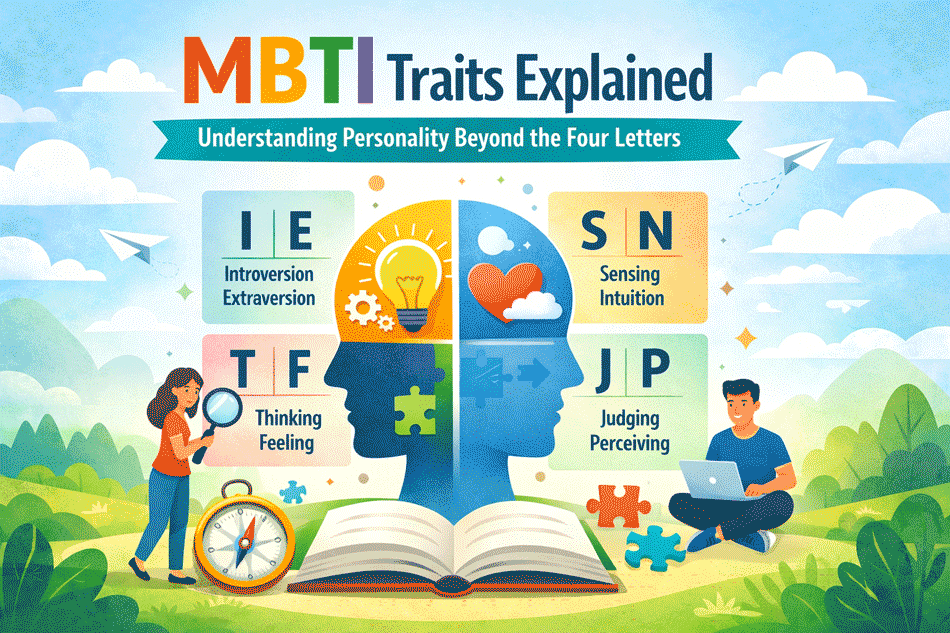
Understanding MBTI Traits Beyond the Four Letters Guide
Welcome to Persona Key. If you are reading this, you likely recognize the four-letter code associated with your personality, but you may feel that something is missing. The popular understanding of Myers-Briggs Type Indicator (MBTI) often stops at the surface level of behavior. However, true self-discovery requires digging deeper. To truly understand mbti traits, one must look beyond the dichotomies and explore the underlying cognitive functions that drive them. This article serves as a comprehensive guide for English-speaking readers who want to move past stereotypes and gain a functional, accurate understanding of their psychological type.
The conclusion is straightforward: your four-letter type is a starting point, not an endpoint. Relying solely on letter-based descriptions often leads to mistypes and superficial self-assessment. Deeper application of mbti traits must return to cognitive functions. Whether you are exploring career fit, relationship dynamics, or personal growth, the engine of your personality lies in how you perceive information and make decisions, not just in whether you prefer parties over quiet nights. This guide will provide the framework, practical applications, and cautionary advice needed to navigate the complex landscape of personality typing with accuracy and integrity.
The Framework and Mechanism Behind MBTI Traits
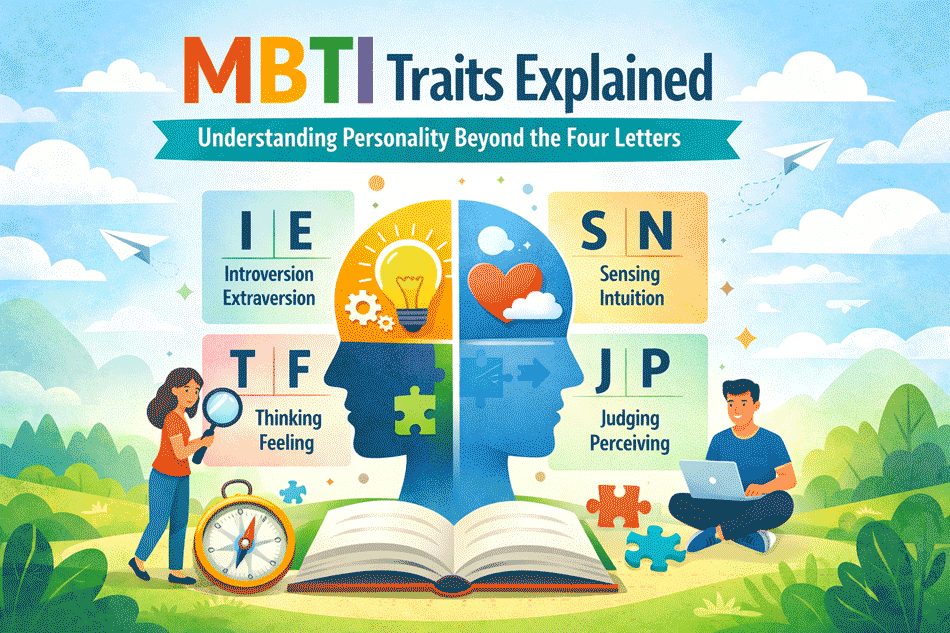
To understand why surface-level traits can be misleading, we must first examine the theoretical roots of the system. The MBTI is built upon Carl Jung's theory of psychological types. Jung proposed that human behavior is not random but follows consistent patterns based on how individuals orient their energy, gather information, make decisions, and structure their lives. The MBTI codifies these preferences into four dichotomies: Extraversion (E) vs. Introversion (I), Sensing (S) vs. Intuition (N), Thinking (T) vs. Feeling (F), and Judging (J) vs. Perceiving (P).
While these dichotomies are useful for broad categorization, they do not explain the how and why of behavior. This is where cognitive functions come in. Each of the 16 types utilizes a stack of four cognitive functions, arranged in a specific order of dominance and consciousness. These functions are the mental processes you use to interact with the world. They include Extraverted Intuition (Ne), Introverted Intuition (Ni), Extraverted Sensing (Se), Introverted Sensing (Si), Extraverted Thinking (Te), Introverted Thinking (Ti), Extraverted Feeling (Fe), and Introverted Feeling (Fi).
The function stack consists of the Dominant function (your core identity), the Auxiliary function (your support system), the Tertiary function (a resource for relaxation or balance), and the Inferior function (your unconscious blind spot and source of growth). For example, an INTJ is not just “introverted and intuitive.” Their specific trait expression comes from a dominant Introverted Intuition (Ni) supported by Extraverted Thinking (Te). This creates a specific decision-making style focused on long-term vision and efficient execution. In contrast, an INTP leads with Introverted Thinking (Ti) and supports it with Extraverted Intuition (Ne), resulting in a style focused on logical accuracy and exploring theoretical possibilities.
Understanding this mechanism is crucial because letter-based typing alone often causes mistypes. Two people may test as the same type but operate from different functional priorities due to developmental stages or environmental adaptation. For instance, a mature INFP may develop their Thinking functions and appear more decisive, potentially mistyping themselves as an INFJ or even a Thinking type on a superficial quiz. Therefore, validating your type requires self-observation of decision patterns, stress reactions, motivation, and blind spots, rather than relying only on tests. Long-term feedback from others who know you well can also clarify whether your perceived traits align with your actual cognitive processes.
When discussing public figures, caution is necessary. While figures like Albert Einstein are often typed as INTPs or Steve Jobs as INTJs, these are widely believed to be approximations based on biographical data, not confirmed facts. Use such examples only as illustrative tools to understand function dynamics, not as definitive proof of how a type must behave.
Why Letter-Based Typing Fails and How to Validate
One of the most significant pitfalls in exploring mbti traits is the over-reliance on online quizzes. These tests measure self-perception, which can be heavily influenced by mood, social desirability, and current life circumstances. You might answer questions based on who you want to be rather than who you are naturally. Furthermore, behavior is adaptable. An Introvert can learn to act Extraverted in a sales role, but this does not change their underlying energy orientation. To validate your type accurately, you must look for consistency over time and across contexts.
Start by identifying your dominant function. This is the process you trust most and use automatically. If you are unsure, observe how you handle stress. When under extreme pressure, types often fall into “grip” behavior, where the inferior function takes over in an unhealthy way. An ENTJ, normally decisive and strategic, might become overly sensitive to criticism and obsessed with minor physical details when in the grip of their inferior Introverted Sensing. Recognizing these stress reactions provides a clearer signal than a multiple-choice question.
Additionally, distinguish between preference and skill. You may be skilled at organizing data (a Thinking trait) but find it draining, preferring to make decisions based on personal values (a Feeling preference). MBTI measures where you get energy, not just what you are good at. Pay attention to what rejuvenates you after a long day. Do you need solitude to recharge your internal thoughts, or do you need to talk things out with others? These energy flows are more reliable indicators than specific hobbies or job titles.
Practical Application Frameworks for Daily Life
Understanding your cognitive stack is not just an intellectual exercise; it is a tool for improving daily functioning. Below are two practical frameworks to apply your mbti traits effectively.
Framework 1: Career and Work-Style Fit
When it applies: This framework is useful when choosing a career path, negotiating work responsibilities, or managing team dynamics. It helps align your natural cognitive strengths with your professional environment.
Function Dynamics: Different functions excel in different work contexts. Extraverted Thinking (Te) users thrive in structured environments with clear metrics and efficiency goals. Introverted Thinking (Ti) users excel in roles requiring deep analysis, system architecture, and logical consistency. Extraverted Feeling (Fe) users often succeed in collaborative, people-focused roles, while Introverted Feeling (Fi) users thrive where authenticity and individual values are respected.
Practical Action Steps: 1. Audit your current tasks. Identify which activities drain you and which energize you. 2. Map these to your functions. If you are an ENFP (Ne-dom), repetitive data entry will drain you faster than an ISTJ (Si-dom). 3. Negotiate your role. Request projects that utilize your dominant and auxiliary functions. 4. Develop your tertiary function to handle necessary but disliked tasks. For example, an INFP can develop Te to manage deadlines without burning out.
Benefits and Limitations: The benefit is increased job satisfaction and reduced burnout. The limitation is that no job is perfect. Every role requires some use of non-preferred functions. Use this framework to optimize, not to excuse avoidance of necessary growth.
How to Judge Fit: If you feel consistently competent yet exhausted, you may be overusing your inferior function. If you feel engaged and lose track of time, you are likely in a flow state using your dominant functions.
Framework 2: Relationship and Communication Guidance
When it applies: Use this framework when navigating conflicts with partners, family members, or colleagues. It helps explain why certain communication styles clash and how to bridge the gap.
Function Dynamics: Conflict often arises from different decision-making criteria. A Thinker may view a problem as a logical puzzle to be solved, while a Feeler may view it as a harmony issue to be resolved emotionally. An Intuitive may focus on future possibilities, while a Sensor focuses on immediate facts and realities.
Practical Action Steps: 1. Identify the other person’s likely function stack. 2. Translate your message. If speaking to a Thinking type, lead with logic and data. If speaking to a Feeling type, lead with values and impact on people. 3. Respect processing styles. Introverts may need time to think before responding; Extraverts may need to talk to think. 4. Avoid judging their preference as a defect. Their way is not wrong; it is just different.
Benefits and Limitations: This reduces misunderstandings and fosters empathy. However, do not use type as an excuse for poor behavior. “I’m an INTP, so I don’t do emotions” is not a valid justification for neglecting a partner’s needs.
How to Judge Fit: If conversations become less defensive and more collaborative, the framework is working. If you find yourself stereotyping the other person, step back and focus on the individual, not the type.
Principles for Personality Growth and Development
Growth in the context of MBTI is not about changing your type; it is about expanding your capacity to use all functions flexibly. Here are universal principles for personality growth.
Identify the Dominant Function First: You cannot grow effectively if you do not know your starting point. Strengthening your dominant function provides the confidence and stability needed to explore weaker areas. For example, an ESFP should first embrace their love for experience and spontaneity (Se) before trying to force rigid long-term planning (Ni).
Distinguish Preference from Skill: As mentioned earlier, you can learn skills outside your preference. Growth means becoming competent in non-preferred areas without losing your core identity. You can learn to be organized (J) even if you prefer flexibility (P), but you should acknowledge the energy cost involved.
Develop the Inferior Function Gradually: The inferior function is the key to mid-life development. It represents your potential for wholeness. However, attacking it too aggressively can lead to stress. Engage with it in low-stakes environments. An INTJ (inferior Se) might try a spontaneous sport or art class to develop presence without demanding perfection.
Explain Loop and Grip Patterns: Be aware of unhealthy states. A “loop” occurs when you bypass your auxiliary function and oscillate between your dominant and tertiary functions, leading to unbalanced behavior. A “grip” occurs under stress when the inferior function hijacks your behavior. Recognizing these patterns allows you to intervene early. If you notice yourself becoming uncharacteristically cynical or impulsive, check your stress levels and return to your auxiliary function for balance.
Growth Means Flexibility, Not Identity Attachment: Do not cling to your type as a rigid identity. “I am an INFP, so I cannot do leadership” is a limiting belief. Use the type as a map, not a cage. True maturity is the ability to access the full range of human cognitive tools when the situation demands it.
8 Common Mistakes and Pitfalls to Avoid
To maintain objectivity and accuracy, avoid these common errors when exploring mbti traits.
1. Don’t Stereotype Based on Letters: Assuming all Thinkers are cold or all Feelers are irrational is incorrect. Better Mindset: View letters as preferences for information processing, not character judgments.
2. Don’t Ignore Context: Behavior changes based on environment. A quiet person at work may be loud at home. Better Mindset: Look for consistent patterns across different life domains.
3. Don’t Rely Solely on Tests: Tests are snapshots, not diagnoses. Better Mindset: Use tests as a hypothesis generator, then validate through study and reflection.
4. Don’t View Type as Static: While preferences are stable, expression evolves. Better Mindset: Expect your relationship with your type to deepen and change over decades.
5. Don’t Use Type as an Excuse: “I’m late because I’m a Perceiver” avoids responsibility. Better Mindset: Acknowledge the preference but manage the behavior.
6. Don’t Assume Compatibility Fatalism: Certain types do not get along. Better Mindset: Any two healthy individuals can build a strong relationship with effort and understanding.
7. Don’t Misidentify Function Stacks: Assuming an ENFP is the same as an NE-dom without checking the auxiliary. Better Mindset: Study the full function stack, not just the first letter.
8. Don’t Ignore Mental Health: Type is not a substitute for psychological diagnosis. Better Mindset: If you struggle significantly, seek professional help regardless of your type.
Continuing Your Learning Journey
The field of personality psychology is evolving. To ensure you are accessing reliable information, encourage yourself to keep following new research and higher-quality MBTI and Jungian resources. Credible organizations such as the Myers & Briggs Foundation and the Center for Applications of Psychological Type (CAPT) provide foundational materials that adhere to the original ethical standards of the instrument. There are also many Jungian educational resources that delve deeper into the archetypal roots of the functions.
Be aware of debates and newer interpretations. The community discusses topics like the validity of the J/P dichotomy versus the function axis. Engage with these discussions critically. Ways to identify reliable information include checking if the author cites established theory, avoids absolute claims, and acknowledges the limitations of the model. Avoid low-quality summaries that promise to “hack” your personality or sell definitive compatibility charts without nuance. True understanding comes from sustained study and self-reflection.
Frequently Asked Questions
1. Where should a beginner start with MBTI?
Start by reading about the four dichotomies to understand the basic language. Then, move quickly to cognitive functions. Read descriptions of all 16 types, not just the one you think you are, to see where you resonate and where you differ.
2. How can I confirm my type without tests?
Focus on your internal motivation. Ask yourself why you do what you do. Do you seek harmony or truth? Do you prefer structure or options? Observe your stress responses and ask trusted friends how they perceive your decision-making process.
3. How does MBTI help with relationship communication?
It highlights differences in information processing. Knowing your partner prefers direct logic over emotional validation (or vice versa) allows you to tailor your communication to be heard more effectively.
4. How can I learn cognitive functions efficiently?
Focus on one pair at a time. Compare Te vs. Ti or Fe vs. Fi. Look for real-life examples of these functions in action. Journaling about your daily decisions can help you identify which function you are using.
5. Can my personality type change over time?
Your core preferences generally remain stable throughout adulthood. However, your ability to use non-preferred functions improves with maturity. You may look different on the outside, but the internal engine remains the same.
6. What if I resonate with multiple types?
Partial resonance is common because everyone uses all eight functions. Look for the type where the description of the stress response and the dominant motivation fit best. Often, the type you are mistyping as is your growth type or your social mask.
7. How do I judge the quality of MBTI information?
Look for sources that emphasize functions over letters, acknowledge limitations, and avoid deterministic language. Credible resources will encourage growth rather than labeling.
In conclusion, mastering mbti traits is a journey of self-awareness. By grounding your understanding in cognitive functions, avoiding common pitfalls, and applying these insights practically, you can transform personality theory from a parlor game into a powerful tool for living. Remember, the goal is not to fit neatly into a box, but to understand the shape of your box so you can know when to step outside of it.