
MBTI 16 Personality Types: Complete Guide & Review
Understanding the MBTI 16 Personality Types Beyond the Surface
The Myers-Briggs Type Indicator (MBTI) is one of the most widely recognized personality frameworks in the world. However, truly understanding the mbti 16 personality types requires moving beyond simple four-letter codes. This guide serves as a comprehensive review and walkthrough for individuals seeking depth, focusing on cognitive functions, real-world application, and sustainable personal growth. While popular culture often treats these types as horoscopes, psychological research suggests they are better viewed as maps of cognitive preference. Whether you are a beginner or looking to refine your self-knowledge, this article provides the tools to navigate your personality landscape effectively.
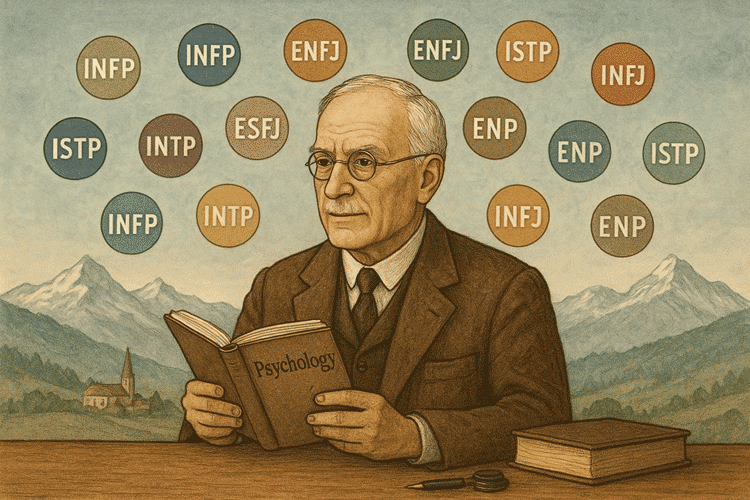
Our goal at Persona Key is to emphasize that your type is a starting point, not a destination. By integrating insights from Jungian psychology and modern behavioral science, we aim to help you leverage your natural strengths while addressing blind spots. The following sections will dissect the theoretical framework, offer practical application strategies, and highlight common pitfalls to avoid during your journey of self-discovery.
Theoretical Framework and Core Mechanisms
To grasp the mbti 16 personality types accurately, one must understand their roots in Carl Jung's theory of psychological types. The MBTI sorts preferences across four dichotomies: Extraversion (E) vs. Introversion (I), Sensing (S) vs. Intuition (N), Thinking (T) vs. Feeling (F), and Judging (J) vs. Perceiving (P). However, the true engine of personality lies in the cognitive function stack. Each type utilizes four primary functions in a specific order: Dominant, Auxiliary, Tertiary, and Inferior.
The Cognitive Function Stack
The Dominant function is the hero of the psyche, operating automatically and confidently. The Auxiliary function supports the dominant, providing balance. For example, an INTJ leads with Introverted Intuition (Ni) but relies on Extraverted Thinking (Te) to execute plans. Understanding this stack is crucial because two types may share letters but operate differently. An ISTP (Ti-Se) processes logic internally before acting, whereas an ESTP (Se-Ti) acts on sensory data first and analyzes later. This distinction explains why behavior alone can be misleading without functional context.
Verifying Your Type Without Tests
Online tests are useful starting points but often lack nuance. To verify your type, observe your energy sources and decision-making processes under stress. Do you recharge alone (I) or with others (E)? Do you trust concrete data (S) or patterns and possibilities (N)? According to the Myers & Briggs Foundation, self-reporting should be combined with feedback from trusted peers. Consider widely speculated cases like Elon Musk, who is commonly associated with the INTJ or ENTP types due to his visionary yet disruptive approach. Such examples illustrate how functions manifest differently even within similar behavioral outcomes.
Practical Applications: Career, Relationships, and Growth
Knowing your type is only valuable if applied. Below are two structured schemes for leveraging your personality profile in daily life.
Scheme 1: Cognitive Function Strengthening
This approach focuses on internal development. Identify your inferior function, which often emerges during high stress. For instance, an ENFJ (Fe-Ni) may struggle with Introverted Thinking (Ti), becoming overly logical or critical when overwhelmed. Actionable Advice: Dedicate 15 minutes daily to solitary analysis or data verification to strengthen this muscle. For Sensors, engage in abstract brainstorming; for Intuitives, practice mindfulness of physical details. This balanced development prevents burnout and increases cognitive flexibility.
Scheme 2: Relationship Compatibility and Communication
In relationships, friction often arises from conflicting function priorities. A Thinking type may offer solutions when a Feeling type seeks empathy. Actionable Advice: Establish a "translation protocol." When discussing conflicts, explicitly state your need: "I need validation" vs. "I need a solution." In the workplace, pair detail-oriented Sensors with big-picture Intuitives for project planning. Research indicates that diverse cognitive teams outperform homogeneous ones when communication norms are established. Remember, compatibility is not about matching types but understanding cognitive gaps.
Function Cognition and Growth Mindset
Personal growth within the MBTI framework follows a universal principle: honor your dominant function while gradually integrating the inferior. Early adulthood is typically dominated by the hero and parent functions. Midlife often brings the emergence of the tertiary and inferior functions, a process Jung called "individuation." Do not force growth; instead, create environments where weaker functions are safe to practice. For example, an introvert seeking leadership roles should not mimic extraversion but rather leverage deep preparation (Introverted strength) to speak with authority.
Common Mistakes and Pitfalls to Avoid
To maintain the integrity of your self-assessment, avoid these eight common errors:
- 1. Stereotyping: Do not assume all INFPs are artistic or all ESTJs are bossy. Types describe preferences, not skills.
- 2. Self-Limiting Beliefs: Never use your type as an excuse for poor behavior, such as "I'm an INTP, so I don't need to be on time."
- 3. Judging Others: Avoid labeling colleagues or partners negatively based on their type. Diversity is a strategic asset.
- 4. Over-reliance on Tests: Test results can fluctuate with mood. Use them as hypotheses, not diagnoses.
- 5. Ignoring Context: Behavior changes based on environment. A stressed extravert may appear introverted.
- 6. Static Mindset: Personality develops over time. You are not frozen in your initial type description.
- 7. Forced Typing: Do not try to convince others of their type. Let them discover it themselves.
- 8. Neglecting Health: Mental models cannot replace professional psychological help for serious issues.
Keeping Up with Updates and Resources
The field of personality psychology is evolving. Readers should track updates from authoritative bodies like the Myers & Briggs Foundation and review new peer-reviewed studies on trait theory versus type theory. While MBTI remains popular, integrating insights from the Big Five (OCEAN) model can provide a more nuanced statistical view. We recommend following reputable psychology blogs and avoiding pop-psychology content that sensationalizes types for clicks. Continuous learning ensures your understanding remains grounded in evidence rather than myth.
Frequently Asked Questions (FAQ)
1. Can my MBTI type change over time?
Your core preferences generally remain stable, but your expression of them matures. You may develop skills associated with opposite preferences, making you appear different without changing your underlying type.
2. How do I confirm my type if I score 50/50 on tests?
Focus on cognitive functions rather than dichotomies. Reflect on which mental process feels most natural and effortless versus which requires energy. Consult with a certified practitioner for deeper analysis.
3. Are certain types better for leadership?
No single type is inherently superior. Effective leadership depends on situational adaptability. An ISTJ may excel in compliance roles, while an ENFP may thrive in innovation-driven cultures.
4. How does MBTI compare to the Big Five?
The Big Five measures traits on a spectrum, while MBTI categorizes preferences. Both have utility; MBTI is often preferred for team dynamics, while Big Five is favored in academic research.
5. Is MBTI scientifically valid?
While criticized for reliability in some academic circles, it remains a valuable tool for self-reflection and communication when used correctly. It should not be used for hiring decisions or clinical diagnosis.