
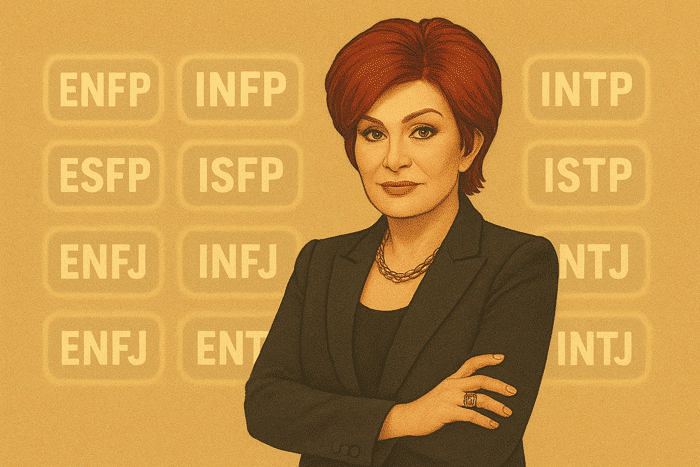
Welcome to Persona Key's personality traits column. Many fans search for ateez mbti types to understand their favorite idols, but true personality insight goes deeper than surface labels. While knowing that a member might be an ENFP or an ISTJ is interesting, the real value lies in understanding the cognitive machinery behind those letters. This guide serves as a comprehensive review and walkthrough for those ready to move beyond stereotypes and explore the psychological depth of type dynamics.
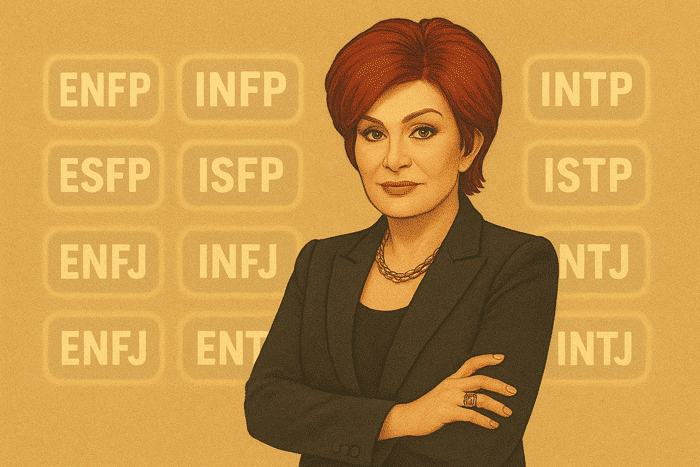
MBTI is not a destination but a starting point. Based on Carl Jung's theory of psychological types, popularized by Myers & Briggs, it offers a framework for understanding how we perceive the world and make decisions. However, accurate application requires returning to cognitive functions. Whether you are analyzing ATEEZ members or yourself, the goal is self-awareness, not categorization.
The Core Framework: Functions Over Letters
The four-letter code is merely a shorthand for a stack of four cognitive functions. These functions determine how you process information. For instance, an INFJ leads with Introverted Intuition (Ni), while an ENFP leads with Extraverted Intuition (Ne). Understanding this distinction is crucial when evaluating public figures. While some fans speculate on ateez mbti types, we must remember that official typings are rarely confirmed by the individuals themselves.
According to the Myers & Briggs Foundation, type development is a lifelong process. The stack includes the Dominant (hero), Auxiliary (parent), Tertiary (child), and Inferior (anima/animus) functions. To verify your type without relying solely on tests, observe your stress responses and natural energy flows. For example, a thought leader often typed as an INTJ, like Elon Musk (commonly categorized, not confirmed), displays strong Te (Extraverted Thinking) in execution, though his dominant function is debated.
7-Day Deep Exploration Roadmap
To move from curiosity to competence, follow this structured plan:
- Day 1: Dimension Basics. Review E/I, S/N, T/F, J/P. Note where you feel most energized.
- Day 2: Function Study. Read about the 8 cognitive functions. Identify which resonates as 'natural'.
- Day 3: Self-Observation. Keep a journal. Record decisions made intuitively vs. logically.
- Day 4: Stress Analysis. Identify your 'grip' stress behavior. This often reveals the inferior function.
- Day 5: External Feedback. Ask trusted friends how they perceive your decision-making process.
- Day 6: Pattern Recognition. Compare your patterns with type descriptions, focusing on functions, not hobbies.
- Day 7: Goal Setting. Define one area for growth based on your inferior function.
Development Strategies and Applications
Once you have a hypothesis about your type, apply it practically. We recommend two primary schemes for development:
Scheme A: Cognitive Function Strengthening
Focus on exercising your auxiliary function to support your dominant one. If you are an introverted thinker (Ti), develop Extraverted Intuition (Ne) to explore possibilities. This prevents isolation. In a career context, this means balancing deep analysis with brainstorming sessions.
Scheme B: Relationship Adaptation
Use type knowledge to navigate conflict. If you value Logic (T) and your partner values Harmony (F), recognize that their feedback is not an attack but a value expression. This is evident in group dynamics, such as those observed in K-pop groups where diverse types collaborate. When discussing ATEEZ members, fans often note how different personalities complement each other on stage, mirroring healthy type interaction.
Growth Principles and Function Cognition
General growth follows a specific trajectory. Prioritize confirming your dominant function first, as it is your superpower. Once stable, gradually develop the inferior function. For example, an Fe-inferior type (like an INTP) should practice small acts of social harmony without losing logical integrity. Research suggests that mid-life is often when the tertiary and inferior functions become more accessible, leading to greater wholeness.
Common Mistakes to Avoid
To maintain intellectual honesty, avoid these eight pitfalls:
- Do not treat MBTI as a horoscope; it is descriptive, not prescriptive.
- Do not use type as an excuse for bad behavior (e.g., 'I'm an P, so I'm late').
- Do not forcibly type others based on limited social media interactions.
- Do not assume certain types are better suited for leadership; all types can lead.
- Do not ignore cultural context when analyzing public figures.
- Do not rely on single-test results; typology requires verification.
- Do not stereotype genders within type theory.
- Do not stop learning; type theory evolves with new psychological research.
Staying Updated: Resources and Versions
The field of personality psychology is dynamic. Readers should track updates from authoritative bodies like the Myers & Briggs Foundation. Be wary of pop-psychology blogs that simplify complex theories. For those interested in celebrity typings, always look for qualifiers like 'commonly typed as' rather than definitive claims. New studies on neuroticism and type correlation are emerging, so keep an open mind.
Frequently Asked Questions
1. Can my MBTI type change over time?
Your core preferences likely remain stable, but your expression of them matures. Development looks like change, but the underlying wiring is consistent.
2. How do I confirm my type without a test?
Study cognitive functions. Tests measure behavior, which can be masked. Functions measure motivation and processing.
3. Are certain types better for relationships?
No. Compatibility depends on maturity and communication, not just type matching. Any type pairing can work with effort.
4. Why do people search for ateez mbti types?
Fans use typology to connect with idols emotionally. It helps humanize celebrities, but remember these are public personas, not private selves.
5. Where can I learn more reliably?
Start with 'Gifts Differing' by Myers or official resources from the Myers & Briggs Foundation. Avoid meme-based content.
In conclusion, whether you are exploring ateez mbti types for fun or seeking personal growth, remember that type is a tool for empowerment. Use it to understand your strengths, navigate your weaknesses, and appreciate the diverse cognitive landscapes of those around you. Personality is a journey, not a label.