
Opening Conclusion: Understanding Your Personality Foundation
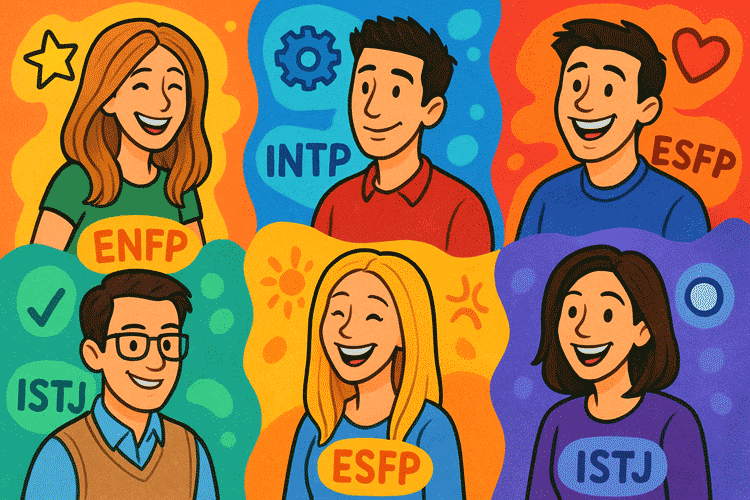
The MBTI framework serves as a powerful starting point for self-discovery, yet it is not a deterministic label that defines your entire existence. For those exploring ambivert MBTI types, understanding the nuance between preference and ability is crucial for accurate self-assessment. This guide positions MBTI as a tool for growth rather than a box, emphasizing that deep application requires returning to cognitive functions. Whether you are a beginner or a returning player, recognizing that type is a dynamic journey ensures you avoid common pitfalls while maximizing personal potential.
Type Framework and Core Mechanisms
Theoretical Roots and Dimensions
Rooted in Carl Jung's theory of psychological types, the MBTI system categorizes preferences across four dichotomies: Extraversion vs. Introversion, Sensing vs. Intuition, Thinking vs. Feeling, and Judging vs. Perceiving. However, the concept of ambivert MBTI types often arises when individuals score near the middle of the Extraversion-Introversion scale. It is vital to understand that MBTI measures energy orientation, not social skill. An ambivert in this context may exhibit flexibility in social settings but still holds a dominant preference for one side when under stress or fatigue.
Cognitive Function Stack Operations
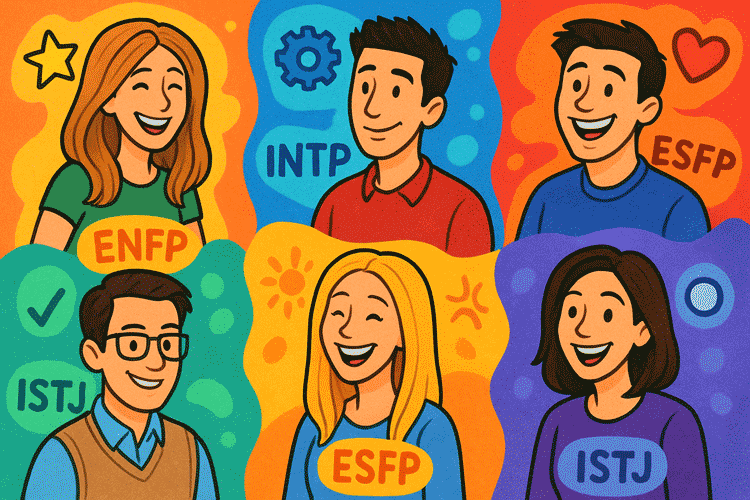
True depth lies in the cognitive function stack, comprising Dominant, Auxiliary, Tertiary, and Inferior functions. These eight functions (Ni, Ne, Si, Se, Ti, Te, Fi, Fe) drive how you process information and make decisions. For instance, an INFJ leads with Introverted Intuition (Ni) supported by Extraverted Feeling (Fe), whereas an ENFP leads with Extraverted Intuition (Ne) supported by Introverted Feeling (Fi). Understanding this stack explains why two types might behave similarly in social settings yet differ fundamentally in motivation. This distinction is key when analyzing ambivert MBTI types, as function development can mimic opposite preferences.
Verification and Celebrity Case Studies
To verify your type, rely on self-observation, feedback from trusted peers, and reflection on stress responses rather than online quizzes alone. Look for consistent patterns in how you recharge and decide. For example, Barack Obama is often categorized as an ENFJ or ENTJ, displaying strong extraverted leadership while maintaining deep introspective reserves, illustrating how developed auxiliary functions can create an ambivert appearance. Similarly, Abraham Lincoln is frequently classified as an INFJ or INTJ, showing how introverted types can engage publicly when driven by a strong vision. Note that celebrity type assignments are based on observational analysis of public behavior and are not official certifications.
7-Day Deep Exploration Roadmap
This roadmap guides you from basic understanding to actionable growth over one week.
- Day 1: Study the four dichotomies deeply, focusing on energy flow rather than social behavior. Write down scenarios where you feel drained versus energized.
- Day 2: Introduction to cognitive functions. Read foundational materials from the Myers & Briggs Foundation to understand the eight function definitions.
- Day 3: Deep dive into function stacks. Map out the suspected stack for your type and compare it with adjacent types to spot differences.
- Day 4: Self-observation in daily life. Track your decisions and note which function (Thinking, Feeling, Sensing, Intuition) was primarily used.
- Day 5: Gather external feedback. Ask close friends or colleagues how they perceive your stress responses and decision-making styles.
- Day 6: Explore stress states. Identify your 'grip' stress behavior where inferior functions take over, causing uncharacteristic reactions.
- Day 7: Set growth goals. Define specific actions to develop your tertiary and inferior functions in safe environments.
Development Suggestions: Two Strategic Paths
Plan A: Cognitive Function Strengthening Path
This plan suits individuals focused on internal mastery and career precision. The goal is to balance the function stack. Actionable steps include practicing your inferior function for 15 minutes daily; for example, a Thinker practicing empathy or a Feeler practicing logical analysis. Engage in tasks that require your tertiary function to reduce internal conflict. This path is ideal for professionals seeking to enhance decision-making robustness and reduce burnout from overusing dominant functions.
Plan B: Interpersonal Adaptation Path
This plan suits individuals focused on relationships and team dynamics. The goal is to translate type knowledge into communication skills. Actionable steps include learning the types of your partner or colleagues and adjusting your communication style accordingly. Practice active listening tailored to their sensing or intuitive preferences. This path is ideal for leaders, parents, or partners who want to reduce friction and improve collaboration without forcing others to change their natural preferences.
Function Cognition and Growth Principles
General principles for healthy development include confirming your dominant function first, as it is your core identity. Next, identify your auxiliary function, which supports your external interaction. Weak function development must be attempted gradually in safe environments to avoid stress. Remember that type is a starting point, not a destination. Growth involves integrating all functions, not just strengthening preferences. Patience is essential, as neural pathways take time to rewire through consistent practice.
Common Mistakes and Pitfalls to Avoid
Avoiding these eight common errors ensures you use MBTI constructively:
- Do not use type labels as an excuse for bad behavior or lack of effort.
- Do not rationalize harmful habits by claiming they are inherent to your type.
- Do not mechanically apply type descriptions during job interviews; focus on skills instead.
- Do not forcibly assign types to others without their consent or self-verification.
- Do not believe type limits your potential or ability to learn new skills.
- Do not ignore the context; behavior changes under stress or different environments.
- Do not treat online test results as absolute truth without further reflection.
- Do not stereotype others based on their type, ignoring individual uniqueness.
Version Update Focus Points
Stay updated by tracking new research in psychological type theory from authoritative bodies. Follow updates from the Myers & Briggs Foundation regarding ethical usage. Monitor publications from recognized typeologists for nuanced interpretations of cognitive functions. Explore high-quality English and Chinese resources that bridge Jungian theory with modern psychology. Attend authorized certification training if you wish to practice professionally. Keep an eye on new books that integrate MBTI with neuroscience for a biological perspective on preferences.
Frequently Asked Questions
1. How do I start if I have zero knowledge?
Begin with the four dichotomies but quickly move to cognitive functions. Read introductory guides on Persona Key and avoid relying solely on meme culture interpretations.
2. How can I confirm my true type accurately?
Combine self-reflection on energy sources with external feedback. Study function stacks rather than just letters, and observe your behavior under significant stress.
3. How do I communicate type differences with my partner?
Frame differences as complementary strengths rather than conflicts. Use type language to explain needs, such as why an Introvert needs quiet time to recharge.
4. How can I learn efficiently with limited time?
Focus on one function per week. Apply the 7-day roadmap but spread it over a month. Prioritize understanding your dominant and inferior functions first.
5. How do I judge if an information source is reliable?
Check if the source cites Jung or Myers & Briggs directly. Avoid content that promotes stereotyping or deterministic views. Look for authors with certified training credentials.