
Introduction: The Role of Personality in Sports Performance
Welcome to Persona Key's Celebrity MBTI column. In the world of sports psychology, understanding the athlete mbti profile has become a crucial tool for fans, coaches, and players alike. While physical talent is undeniable, the mental framework through which an athlete processes information, handles pressure, and interacts with teammates often dictates long-term success. This comprehensive guide explores the intersection of personality theory and athletic performance, offering a deep dive into how cognitive functions influence decision-making on and off the field.
It is essential to state upfront that personality type is a starting point, not a destination. No single type guarantees a gold medal, nor does any type preclude success. However, by analyzing the underlying cognitive mechanisms, we can better understand why certain athletes thrive in specific roles. Whether you are interested in the solitary focus of a marathon runner or the dynamic teamwork of a basketball point guard, the MBTI framework provides a lens for interpretation. Throughout this article, we will reference authoritative sources such as the Myers & Briggs Foundation to ensure theoretical accuracy while maintaining a practical focus on application.
Core Framework: Understanding the Mechanisms Behind Type
To truly grasp the athlete mbti dynamic, one must move beyond the four-letter code and explore the cognitive function stack developed from Carl Jung's theories. The MBTI system categorizes preferences across four dichotomies: Extraversion vs. Introversion, Sensing vs. Intuition, Thinking vs. Feeling, and Judging vs. Perceiving. However, the real power lies in the function stack: Dominant, Auxiliary, Tertiary, and Inferior functions.
The Four Dimensions in a Sports Context
Extraversion (E) vs. Introversion (I): In sports, this often relates to energy sourcing. Extraverted athletes may thrive in high-energy team environments, feeding off the crowd and verbal communication. Introverted athletes might excel in sports requiring intense internal focus, such as archery or long-distance running, where external stimulation can be distracting.
Sensing (S) vs. Intuition (N): Sensing types typically focus on immediate reality, concrete data, and present mechanics. They are often excellent at executing precise techniques. Intuitive types look for patterns, future possibilities, and strategic overarching plans. A Sensing quarterback might focus on the immediate grip and throw, while an Intuitive one reads the defensive formation's future shift.
Thinking (T) vs. Feeling (F): This dimension influences decision-making criteria. Thinking types prioritize logic, efficiency, and objective analysis. They may handle criticism well if it is constructive. Feeling types prioritize harmony, values, and team cohesion. They often serve as the emotional glue of a team, managing morale during losing streaks.
Judging (J) vs. Perceiving (P): This relates to structure and adaptability. Judging types prefer planned routines, strict training schedules, and closure. Perceiving types are adaptable, thriving in chaotic environments where quick adjustments are necessary, such as extreme sports or improvisational game moments.
The Cognitive Function Stack
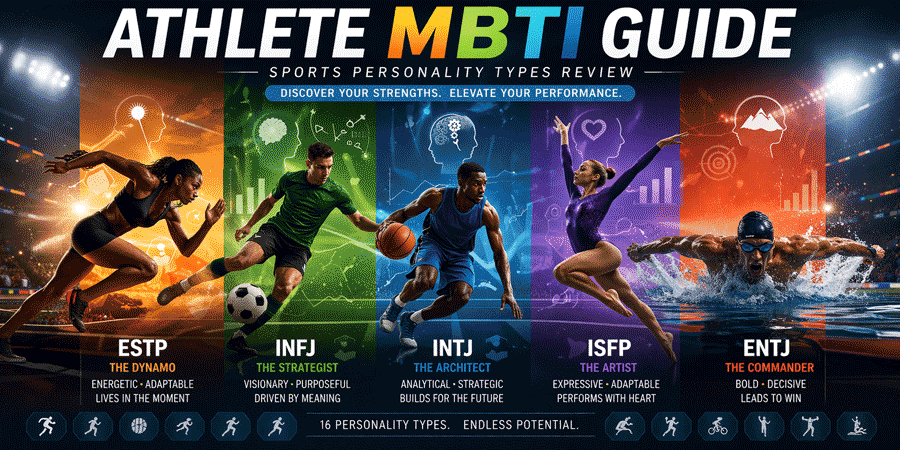
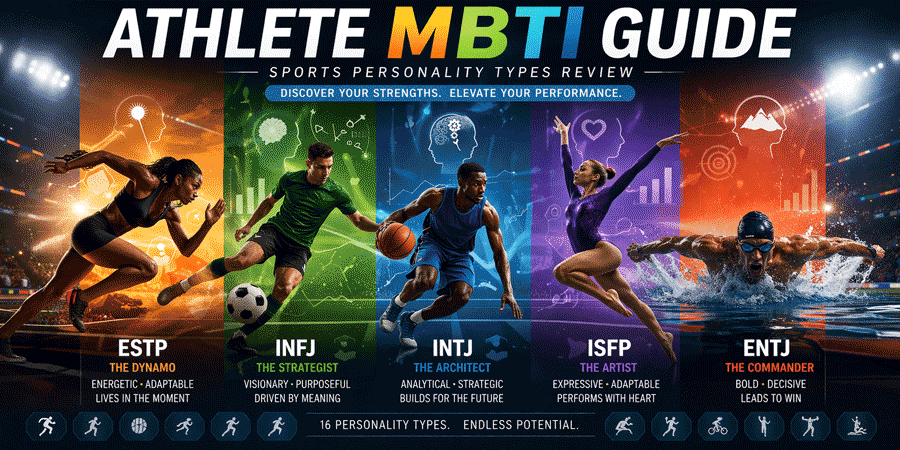
Understanding the specific functions provides deeper insight than the four letters alone. For instance, an ESTP (often associated with dynamic action sports) leads with Extraverted Sensing (Se), allowing them to react instantly to physical stimuli. An INFJ (often found in coaching or strategic roles) leads with Introverted Intuition (Ni), focusing on long-term vision and underlying meanings.
Perceiving Functions (Se, Si, Ne, Ni): These determine how information is gathered. Se users live in the moment; Si users compare the present to past experiences; Ne users brainstorm possibilities; Ni users synthesize information into a singular vision.
Judging Functions (Te, Ti, Fe, Fi): These determine how decisions are made. Te users organize the external world for efficiency; Ti users seek internal logical consistency; Fe users maintain group harmony; Fi users act according to personal values.
Verification of type should not rely solely on online tests, which can be inaccurate. Instead, individuals should observe their stress responses, energy drains, and natural inclinations during competition. Feedback from trusted coaches and teammates can also validate self-perception.
Application: Types in Career, Relationships, and Growth
Applying the athlete mbti framework extends beyond performance into career longevity, team dynamics, and personal development. Different types face unique challenges and possess distinct strengths in these areas.
Workplace and Career Trajectory
In professional sports, the "workplace" is the team environment. STJ types (ISTJ, ESTJ) often excel in structured organizations, respecting hierarchy and protocol. They make reliable team captains who enforce rules. NFP types (INFP, ENFP) may struggle with rigid structures but thrive in creative roles within sports, such as sports marketing or athlete advocacy, where authenticity is valued.
Post-career transitions are also type-dependent. Thinking types may transition easily into analysis or coaching roles that require objective critique. Feeling types might move into mentorship or community outreach, leveraging their empathy to support younger athletes.
Relationships and Team Chemistry
Team cohesion often depends on functional compatibility. A team composed entirely of high-Se users might be explosive but lack strategic planning. A team of high-Ni users might overthink without taking action. Balanced teams often perform better. For example, a coach with strong Te (Executive) might pair well with a captain who has strong Fe (Harmony), ensuring both goals are met and morale is maintained.
In intimate relationships, athletes face unique pressures. Travel, public scrutiny, and physical demands strain partnerships. Types with strong Fi (Introverted Feeling) may need significant alone time to recharge after social events, which partners must understand. Types with strong Fe may absorb the stress of their partner too readily, requiring boundaries.
Growth and Development Scenarios
Personal growth for athletes involves leveraging strengths while managing weaknesses. An athlete with inferior Fe (such as an ISTP) might struggle with team expectations of emotional availability. Recognizing this allows them to develop specific communication strategies rather than viewing themselves as "broken." Conversely, an athlete with inferior Ti (such as an ESFJ) might over-personalize tactical criticism, needing to learn to separate logic from identity.
Development Plans: Actionable Strategies for Athletes
To maximize potential, we propose two distinct development frameworks based on cognitive function theory. These plans are designed to be adaptable across various sports disciplines.
Plan A: Cognitive Function Strengthening
Objective: Enhance the auxiliary and tertiary functions to support the dominant function.
Scenario: An athlete feels stuck in their performance plateau or struggles with specific mental aspects of the game.
Action Steps:
- Identify the Dominant Function: Confirm what drives you. If you are an Se-dom, acknowledge your need for action.
- Exercise the Auxiliary: If your auxiliary is Thinking, practice objective analysis of game tape without emotional attachment. If it is Feeling, practice checking in on teammates' emotional states.
- Engage the Tertiary: Use this for relaxation. If you are a Thinker, engage in creative hobbies (Ne/Si) to prevent burnout.
- Monitor the Inferior: Under stress, the inferior function emerges negatively. Recognize signs of "grip" stress (e.g., an usually organized J-type becoming chaotic) and implement rest protocols.
Plan B: Relationship and Communication Adaptation
Objective: Improve team dynamics and coach-athlete communication.
Scenario: Conflict arises within the team, or feedback from coaches is not landing effectively.
Action Steps:
- Map Team Types: Understand the general preferences of key teammates. Do they prefer direct data (T) or supportive encouragement (F)?
- Adjust Feedback Delivery: When giving feedback to a Feeling type, sandwich critique between affirmations. When giving feedback to a Thinking type, be direct and logical.
- Conflict Resolution: Use type knowledge to depersonalize conflict. Recognize that a teammate's silence might be Introversion, not anger.
- Shared Language: Establish a team vocabulary based on strengths. "We need some Se energy here" might mean "let's be more aggressive," while "We need Ni" might mean "let's look at the long game."
Function Cognition and Growth Mindset
Growth in the MBTI framework is not about changing your type, but about expanding your repertoire. The goal is "type development," where an individual becomes proficient in using all eight functions, though preferences remain.
Priority 1: Confirm the Dominant Function. This is your superpower. In sports, this is the state of "flow." Protect the time and conditions needed for your dominant function to operate. For an Ni-dom, this might mean uninterrupted visualization time.
Priority 2: Develop the Inferior Function. This is the path to maturity. The inferior function often holds the key to resolving mid-career crises. For an ETJ, developing Introverted Feeling (Fi) might mean connecting with personal values beyond winning, preventing identity crises upon retirement.
General Principle: Progress is non-linear. There will be periods where you revert to comfort zones. Consistency in self-observation is key. Journaling about decision-making processes after games can reveal functional patterns over time.
Common Mistakes and Pitfalls to Avoid
When exploring the athlete mbti landscape, several common errors can lead to misunderstanding or misapplication of the theory. Avoiding these traps ensures a healthier relationship with personality typing.
1. Do Not Use Type as an Excuse
Saying "I am an INTP, so I cannot be a leader" is a misuse of the tool. Type describes preferences, not abilities. Any type can develop leadership skills through conscious effort.
2. Do Not Stereotype Teammates
Assuming a teammate is "too emotional" because they are an F-type ignores their individual development. Treat individuals as unique humans first, types second.
3. Do Not Rely Solely on Online Tests
Free online quizzes often lack psychometric validity. They are starting points, not diagnoses. Professional assessment or deep self-study is required for accuracy.
4. Do Not Force Judgments on Others
Typing others without their consent can be intrusive and inaccurate. Focus on understanding your own type to improve your interactions, rather than labeling others.
5. Do Not Ignore Context
Behavior changes under stress. An athlete might appear Introverted during competition due to focus, even if they are Extraverted. Consider the context before assigning a type.
6. Do Not Neglect the Shadow Functions
Under extreme stress, people use their "shadow" functions negatively. Recognizing this helps in managing burnout. Do not ignore signs of mental fatigue.
7. Do Not Treat Type as Static
While core preferences remain stable, expression evolves. A young athlete may express their type differently than a veteran. Allow for growth and change in expression.
8. Do Not Overlook Cultural Factors
MBTI was developed in a Western context. Cultural norms influence how functions are expressed. Be cautious when applying these frameworks across diverse international teams.
Version Updates and Resource Tracking
The field of personality psychology is evolving. While the MBTI instrument remains popular, new research continues to refine our understanding. Readers should track updates from the Myers & Briggs Foundation for official instrument changes. Additionally, following reputable sports psychology journals can provide data on how personality traits correlate with performance metrics.
We recommend subscribing to newsletters from certified MBTI practitioners who specialize in organizational psychology. Avoid blogs that make definitive claims about celebrity types without evidence. Look for content that emphasizes nuance and cognitive functions over simple four-letter stereotypes. As research into neurodiversity and personality intersects, new insights may emerge regarding how different brains process competitive stress.
Frequently Asked Questions (FAQ)
1. Can I change my MBTI type through training?
No, your core preferences are generally stable throughout adulthood. However, you can develop skills associated with non-preferred functions. You cannot change your type, but you can change your behavior and flexibility.
2. Which MBTI type is the best for sports?
There is no "best" type. Different sports favor different cognitive styles. Explosive sports may attract Se users, while strategic sports may attract Ni users. Success depends on how well you leverage your specific strengths.
3. How do I confirm my type without a test?
Study the cognitive functions. Reflect on where you get energy (Introversion/Extraversion) and how you make decisions (Thinking/Feeling). Ask trusted friends how they perceive your stress responses. Self-observation over time is more accurate than a single quiz.
4. Does MBTI help with team communication?
Yes, when used correctly. It provides a shared language for discussing differences. It helps teammates understand that a lack of verbal response might not be rudeness but a processing style. It fosters empathy and reduces conflict.
5. Are celebrity MBTI types accurate?
Celebrity types are often speculative. Unless a celebrity has publicly shared their official assessment, types assigned by fans are based on observation and should be taken with a grain of salt. We use terms like "generally considered" to reflect this uncertainty.
Conclusion: Type as a Tool for Excellence
In conclusion, the athlete mbti framework offers a valuable perspective for understanding the mental game of sports. By focusing on cognitive functions rather than stereotypes, athletes and coaches can unlock deeper levels of performance and teamwork. Remember that type is a map, not the territory. Use it to navigate your strengths, understand your challenges, and connect with others more effectively. Whether you are aiming for the podium or simply seeking to enjoy the game more fully, self-knowledge is the ultimate competitive advantage. Continue to learn, adapt, and grow, knowing that your personality is a dynamic part of your athletic journey.