
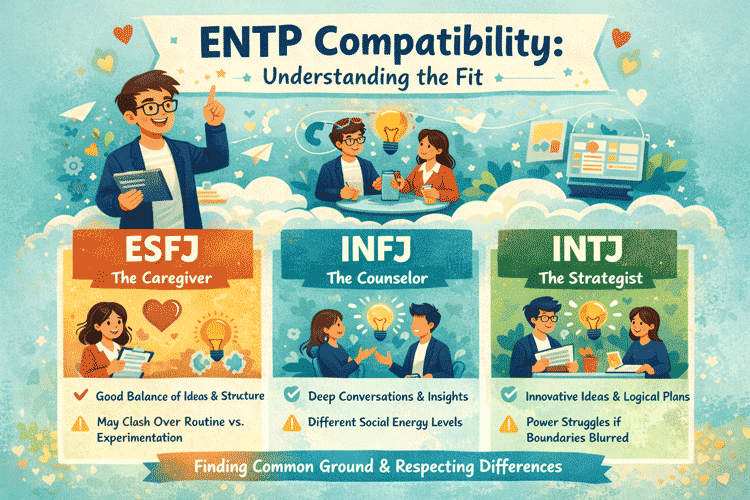
Introduction: Beyond the Four Letters
Welcome to Persona Key's definitive resource on personality psychology. If you are searching for a comprehensive mbti 16 personality types overview, you have arrived at the right place. While many online quizzes offer a quick label, true self-understanding requires diving deeper into the cognitive mechanisms that drive behavior. This guide is designed for individuals who view personality typing not as a final destination, but as a starting point for profound personal growth.
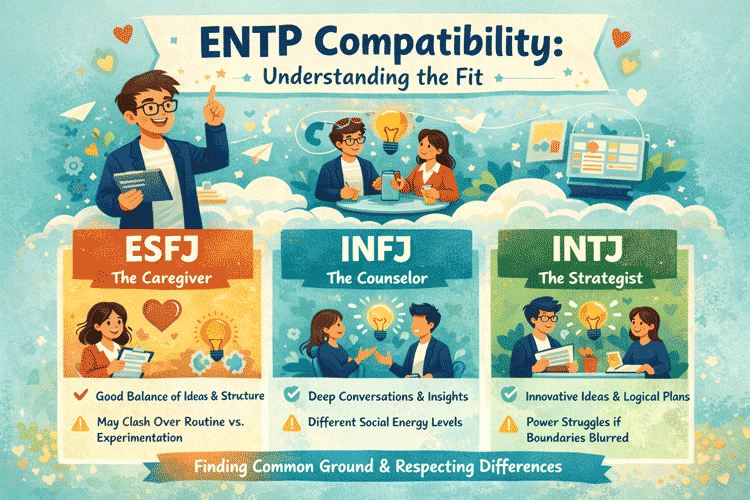
The Myers-Briggs Type Indicator (MBTI) is one of the most popular personality frameworks in the world. However, its utility is often limited by superficial interpretations. To truly leverage this tool, one must move beyond the four-letter code and explore the underlying cognitive functions. Whether you are looking to improve your career trajectory, deepen your relationships, or understand your own decision-making processes, this article provides a structured pathway. We will explore the theoretical roots, practical applications, and common pitfalls associated with type dynamics.
Our goal is to provide an objective, evidence-informed perspective. We rely on established psychological theories, including the work of Carl Jung and the Myers & Briggs Foundation, to ensure accuracy. Remember, type is a preference, not a capability. You can develop skills outside your natural preference, but understanding your innate wiring helps you work with your grain, not against it.
Theoretical Framework and Core Mechanisms
To grasp the mbti 16 personality types overview effectively, we must first understand the engine behind the types. The system is rooted in Carl Jung's theory of psychological types, which posits that much of what appears to be random variation in human behavior is actually quite orderly and consistent, stemming from basic differences in how individuals prefer to use their perception and judgment.
The Four Dichotomies
Traditionally, MBTI is explained through four dichotomies. These describe where you focus your attention, how you take in information, how you make decisions, and how you deal with the outer world.
- Extraversion (E) vs. Introversion (I): This dimension describes where you derive your energy. Extraverts tend to recharge through interaction with the external world, while Introverts recharge through solitude and internal reflection.
- Sensing (S) vs. Intuition (N): This relates to information gathering. Sensors focus on concrete details, facts, and present realities. Intuitives focus on patterns, possibilities, and future implications.
- Thinking (T) vs. Feeling (F): This describes decision-making. Thinkers prioritize logic, objective criteria, and consistency. Feelers prioritize values, harmony, and person-centered concerns.
- Judging (J) vs. Perceiving (P): This relates to lifestyle orientation. Judgers prefer structure, plans, and closure. Perceivers prefer flexibility, spontaneity, and keeping options open.
The Cognitive Function Stack
While dichotomies are useful, the cognitive function stack offers a more nuanced view. Each type uses four main functions in a specific order: Dominant, Auxiliary, Tertiary, and Inferior. These functions are the mental processes you use to navigate life.
Perceiving Functions:
- Se (Extraverted Sensing): Focuses on the immediate physical environment, action, and sensory experience. Common in ESTP and ESFP types.
- Si (Introverted Sensing): Focuses on past experiences, stability, and detailed recall. Common in ISTJ and ISFJ types.
- Ne (Extraverted Intuition): Focuses on brainstorming, connecting disparate ideas, and future possibilities. Common in ENTP and ENFP types.
- Ni (Introverted Intuition): Focuses on foresight, converging patterns, and long-term vision. Common in INTJ and INFJ types.
Judging Functions:
- Te (Extraverted Thinking): Focuses on organizing the external world, efficiency, and objective logic. Common in ENTJ and ESTJ types.
- Ti (Introverted Thinking): Focuses on internal logical consistency, precision, and analysis. Common in INTP and ISTP types.
- Fe (Extraverted Feeling): Focuses on group harmony, social values, and interpersonal connection. Common in ENFJ and ESFJ types.
- Fi (Introverted Feeling): Focuses on internal values, authenticity, and individual moral compass. Common in INFP and ISFP types.
Understanding your function stack allows you to verify your type without relying solely on tests. For example, if you identify as an INTJ, your dominant function should be Ni (visioning), supported by Te (execution). If you find you are primarily driven by Fi (personal values), you might actually be an INFP. Self-observation and feedback from trusted peers are crucial for accurate typing.
Type Groups and Real-World Applications
To make this mbti 16 personality types overview actionable, we categorize the 16 types into four temperaments. This helps in understanding broad behavioral trends while acknowledging individual uniqueness.
Analysts (NT Types)
INTJ, INTP, ENTJ, ENTP. These types are characterized by strategic thinking and intellectual curiosity. They often excel in fields requiring complex problem-solving. Career Fit: Science, engineering, strategy, entrepreneurship. Relationships: They value competence and intellectual stimulation. Challenges may arise in expressing emotions. Case Study: Elon Musk is often associated with the ENTJ or INTJ types due to his visionary goals and systematic approach, though type should never be asserted definitively without personal confirmation.
Diplomats (NF Types)
INFJ, INFP, ENFJ, ENFP. These individuals are driven by empathy, idealism, and a desire for meaning. Career Fit: Counseling, arts, human resources, education. Relationships: They seek deep, authentic connections. They may struggle with conflict or criticism. Case Study: Mother Teresa is widely considered an INFJ, reflecting a life dedicated to humanitarian values and deep intuitive understanding of others' needs.
Sentinels (SJ Types)
ISTJ, ISFJ, ESTJ, ESFJ. These types value stability, order, and community. They are the backbone of many organizations. Career Fit: Administration, healthcare, law enforcement, management. Relationships: They are loyal and dependable. They may resist sudden changes. Application: In a team setting, Sentinels ensure protocols are followed and details are not missed.
Explorers (SP Types)
ISTP, ISFP, ESTP, ESFP. These individuals are adaptable, action-oriented, and live in the moment. Career Fit: Trades, emergency services, arts, sales. Relationships: They bring fun and spontaneity. They may struggle with long-term planning. Application: In crisis situations, Explorers often remain calm and act decisively based on immediate data.
Practical Growth Schemes
Knowing your type is only useful if you apply it. Here are two structured schemes for leveraging your personality profile.
Scheme 1: Cognitive Function Strengthening
This approach focuses on optimizing your natural strengths while managing weaknesses.
- Step 1: Identify Your Dominant Function. Spend 80% of your energy in areas where this function shines. For example, an Ne-dominant person should prioritize brainstorming roles.
- Step 2: Support with Auxiliary. Use your auxiliary function to ground your dominant one. An Ne-dom needs Ti or Fi to evaluate which ideas are viable.
- Step 3: Monitor the Inferior. Under stress, the inferior function may take over (the "grip"). Recognize this state. If an INTJ (inferior Se) starts overindulging in sensory pleasures, it is a sign of burnout.
- Step 4: Deliberate Practice. Consciously practice using your tertiary and inferior functions in low-stakes environments to build resilience.
Scheme 2: Relationship Adaptation
This scheme focuses on improving interactions with others based on type dynamics.
- Communication Translation: When speaking to a Thinker, lead with logic. When speaking to a Feeler, lead with impact on people.
- Conflict Resolution: Understand that a J type sees a deadline as a commitment, while a P type sees it as flexible. Negotiate expectations early.
- Team Composition: Build diverse teams. An all-NT team may lack empathy; an all-SF team may lack strategic risk-taking. Balance is key.
- Feedback Loops: Ask others how your type-specific blind spots affect them. For instance, ask an F type if your T-style directness feels harsh.
Developmental Roadmap: From Dominant to Inferior
Personal growth in the context of MBTI is about function development. The goal is not to change your type, but to become a healthier version of it.
Early Life: Typically, the dominant function develops first. Children often show clear preferences for how they play and learn. Encouraging this natural style builds confidence.
Young Adulthood: The auxiliary function usually differentiates during this period. This is when individuals learn to balance their inner world with outer demands. Education and early career choices often facilitate this.
Mid-Life: The tertiary and inferior functions become more accessible. This is often called "individuation." Individuals may explore hobbies or careers that utilize previously neglected functions. For example, a logical Thinker might explore art or counseling to develop Feeling.
Late Life: Integration of all functions leads to wisdom. The individual can access any function as needed, though the preference remains. This flexibility is the hallmark of psychological maturity.
Common Mistakes and Pitfalls to Avoid
When utilizing an mbti 16 personality types overview, several common errors can lead to misunderstanding. Avoiding these ensures the tool remains constructive.
- Do Not Use Type as an Excuse: Saying "I am an INTP, so I cannot be emotional" is self-limiting. Types describe preferences, not abilities. You are responsible for your behavior regardless of type.
- Do Not Stereotype Others: Assuming you know someone's thoughts because you know their type is disrespectful. Every individual is unique. Use type as a hypothesis, not a verdict.
- Do Not Ignore Context: Behavior changes based on environment. A stressed ESFJ may look like an unhealthy INTP. Always consider the situation before typing.
- Do Not Value One Type Over Another: There is no "best" type. Each type contributes unique value to society. Hierarchy thinking undermines the purpose of the framework.
- Do Not Rely Solely on Online Tests: Free online quizzes are often inaccurate. They measure self-perception, which can be biased. Use them as a starting point, not a diagnosis.
- Do Not Force Type on Children: Children are still developing. Labeling them too early can restrict their exploration of different behaviors and skills.
- Do Not Neglect the Shadow: Everyone has aspects of their personality they deny. Ignoring these "shadow" functions can lead to projection and conflict.
- Do Not Treat Type as Static: While core preferences remain stable, expression evolves. Allow room for growth and change over the lifespan.
Keeping Updated: Resources and Research
The field of personality psychology is evolving. To maintain accuracy, readers should track reputable sources. The Myers & Briggs Foundation provides official updates and ethical guidelines. Additionally, academic research on the Big Five personality traits often correlates with MBTI dimensions, offering a broader scientific context. We recommend following licensed practitioners who adhere to ethical standards. Avoid sources that promise "hack your personality" solutions, as genuine growth takes time and effort. Joining communities focused on cognitive functions rather than just stereotypes can also provide deeper insights. Always cross-reference information with established psychological literature.
Frequently Asked Questions
1. Can my MBTI type change over time?
Your core preferences are generally stable, similar to handedness. However, your behavior and development of functions change. You may learn to act more like an Extravert even if you are an Introvert. This is growth, not a type change.
2. How do I confirm my type without a test?
Study the cognitive functions. Reflect on what drains you versus what energizes you. Ask close friends how they perceive your decision-making process. Consistency over time is a key indicator.
3. Are certain types better for leadership?
No. Effective leadership depends on the context and the ability to adapt. While ENTJs are stereotypically seen as leaders, INFJs can lead through inspiration, and ISTJs through reliability. Diversity in leadership is strength.
4. How does MBTI compare to the Big Five?
The Big Five is more widely accepted in academic psychology due to its statistical robustness. MBTI is more accessible for personal development. They measure similar constructs but use different frameworks. Both can be useful depending on your goal.
5. Is MBTI scientifically valid?
MBTI has reliability issues in test-retest scenarios compared to academic measures. However, the underlying theory of psychological types has merit. It is best used as a tool for self-reflection and communication rather than a rigorous psychometric assessment for hiring.