
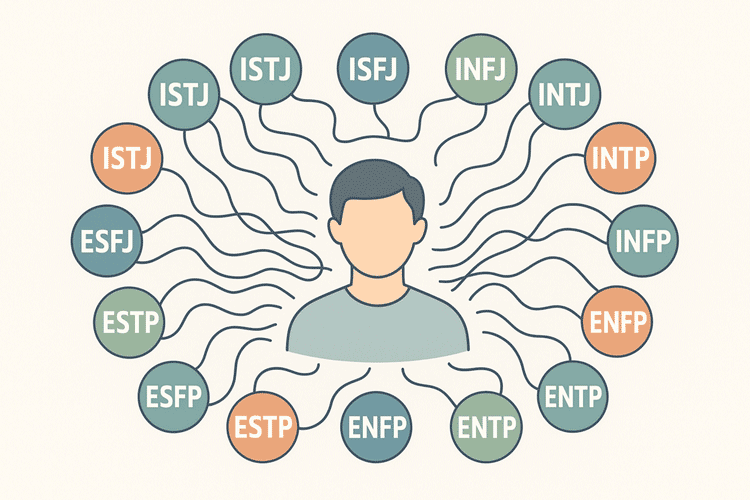
Can MBTI Type Change? The Definitive 2025 Guide
Can MBTI type change and can MBTI type change over time are questions that intrigue personality enthusiasts, psychologists, and anyone curious about human growth. While the MBTI framework is built around stable preferences, life experiences, age, and personal growth can make it seem like your type evolves.
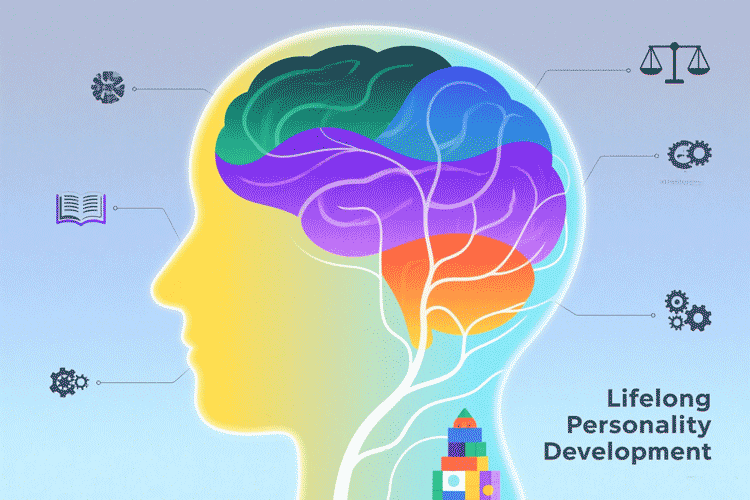
1. Understanding MBTI and Its Core Concept
Before we dive into can MBTI type change, we need to understand what MBTI actually measures. The Myers-Briggs Type Indicator classifies personalities based on four preference pairs:
Extraversion (E) – Introversion (I) Sensing (S) – Intuition (N) Thinking (T) – Feeling (F) Judging (J) – Perceiving (P)
For example:
ENTP = Extraverted, Intuitive, Thinking, Perceiving ISFJ = Introverted, Sensing, Feeling, Judging
Your MBTI type reflects your natural cognitive preferences, much like your dominant hand. The debate over can MBTI type change over time arises because while your preference might remain constant, your behavior can adapt significantly.
2. Why People Wonder if MBTI Type Can Change
The question can MBTI type change often comes from personal experience. Here are some common triggers:
2.1 Inconsistent Test Results
You take an MBTI test twice, a year apart, and get two different types. This makes you wonder whether you truly changed or the test was inaccurate.
2.2 Life Stage Transitions
Major shifts — starting a career, marriage, parenthood, moving abroad — can push you to develop skills outside your natural preference.
2.3 Personal Growth
Self-improvement programs or therapy can encourage behaviors opposite to your MBTI type, making you seem like a new person.
2.4 Age-Related Maturity
As people mature, they may express traits from their less dominant functions, leading to the belief that their MBTI type changed.
3. Can MBTI Type Change? The Theoretical View
Psychology offers two main perspectives:
Stable Core Theory
Your cognitive preferences remain stable through life, similar to your natural eye color. Even if your behavior changes, your core type stays constant.Behavioral Adaptation Theory
Life circumstances can lead you to habitually use your non-preferred functions, so outwardly, you might appear to be another type.
In reality, when people ask can MBTI type change over time, the answer is usually:
Your core type is stable. Your behavioral expression can evolve significantly.
4. Factors That Make MBTI Type Appear to Change
4.1 Life Experience
Example: An INFP working in corporate management might develop structured habits and appear like an INFJ.
4.2 Career Demands
Example: An ISTP may become more people-oriented in a leadership role, resembling an ESTJ.
4.3 Relationships
Example: An ENTP in a relationship with an ISFJ might become more detail-focused and nurturing.
4.4 Cultural and Environmental Influence
Moving to a culture that values directness might make an ISFP appear more like an ENTP.
5. Scientific Evidence: Personality Stability vs Change
While MBTI is based on Jungian psychology rather than hard scientific metrics, research from the Big Five model shows:
Personality traits are relatively stable but can change modestly over decades. Conscientiousness and Agreeableness tend to increase with age. Life events like parenthood or career changes can shift behavior.
So, can MBTI type change over time? Scientific evidence says personality is stable yet flexible in expression — which aligns with the MBTI framework.
6. Why MBTI Test Results Differ
If your MBTI result changes, it might be due to:
Mood during testing Temporary life stress Ambiguity in interpreting questions Low-quality online tests
To reduce fluctuations:
Take the test when calm Use a reputable MBTI provider Reflect honestly on long-term preferences
7. MBTI Type Across Life Stages
7.1 Childhood
Preferences are not fully formed; environment plays a major role.
7.2 Adolescence
Identity exploration can lead to inconsistent MBTI results.
7.3 Early Adulthood
External demands (jobs, studies) shape skill development.
7.4 Midlife
People often integrate opposite functions for balance.
7.5 Later Life
External demands lessen; people return to natural preferences.
8. Cross-Cultural Perspective
When moving between cultures, personality expression can shift:
Collectivist cultures may encourage introverts to behave more socially. Individualist cultures may encourage more assertive self-expression.
These changes often make people question can MBTI type change when in fact they are adapting, not transforming their core type.
9. Case Studies: When MBTI Appears to Change
Case 1: A 25-year-old ISTJ moves abroad, adapts to a fast-paced social environment, and tests as ESTJ after five years. Case 2: A ENFP becomes a parent, adopts more structured routines, and resembles ESFJ in daily life. Case 3: A INTP becomes a CEO, mastering public speaking and team leadership, looking more like ENTJ.
10. How to Determine If Your MBTI Type Really Changed
Retake the MBTI test multiple times over several months. Study cognitive functions instead of just letter codes. Ask trusted people to describe your natural tendencies. Identify what feels effortless vs. what feels forced. Consider whether the change is temporary adaptation or permanent shift.
11. Can MBTI Type Change Over Time in a Career Context?
Yes, in outward behavior.
Introverts may learn networking. Perceivers may master planning. Thinkers may enhance empathy skills.
But at the core, your natural preferences often remain.
12. Conclusion
So, can MBTI type change?
Core type: Largely stable. Outward behavior: Highly adaptable. Over time: You may integrate traits from other types, but your foundational preferences stay.
Understanding this helps you use MBTI as a growth tool, not a rigid label.
Yes, temporarily. Long-term, your core type usually resurfaces.
Q2: Can MBTI type change over time naturally?Yes, in external expression. Core preferences are stable.
Q3: Why did my MBTI test result change?Likely due to environment, stress, or test quality, not actual core change.
Q4: Can MBTI type change with therapy?Therapy can enhance less-preferred functions, but core type remains.
Q5: Can MBTI type change in different cultures?Your expression may adapt; core type stays the same.
Q6: Can MBTI type change in old age?You may act differently as priorities shift, but core preferences endure.
Free MBTI test