
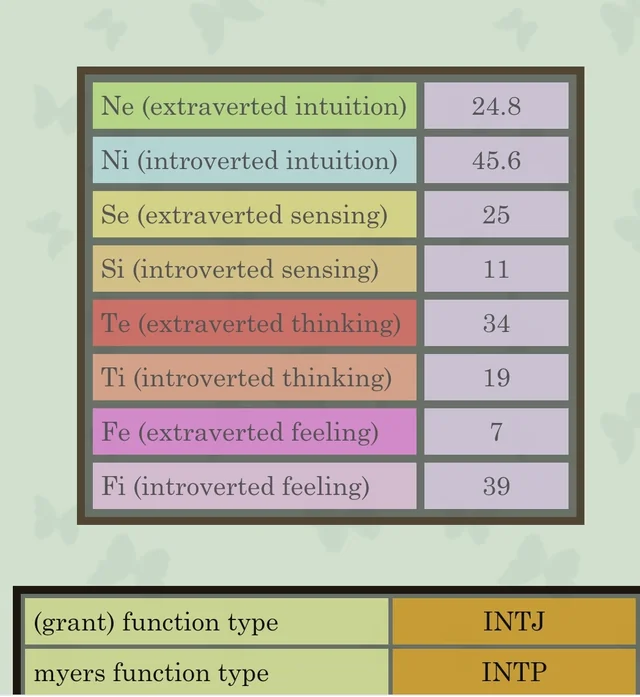
Sakinorva MBTI Test Explained
The Sakinorva MBTI test is one of the most discussed personality tests among MBTI fans, especially people who are interested in cognitive functions. Unlike many simple MBTI quizzes that focus mainly on the four letters, Sakinorva is often used by people who want a deeper look at Jungian cognitive functions such as Ti, Te, Fi, Fe, Ni, Ne, Si, and Se.
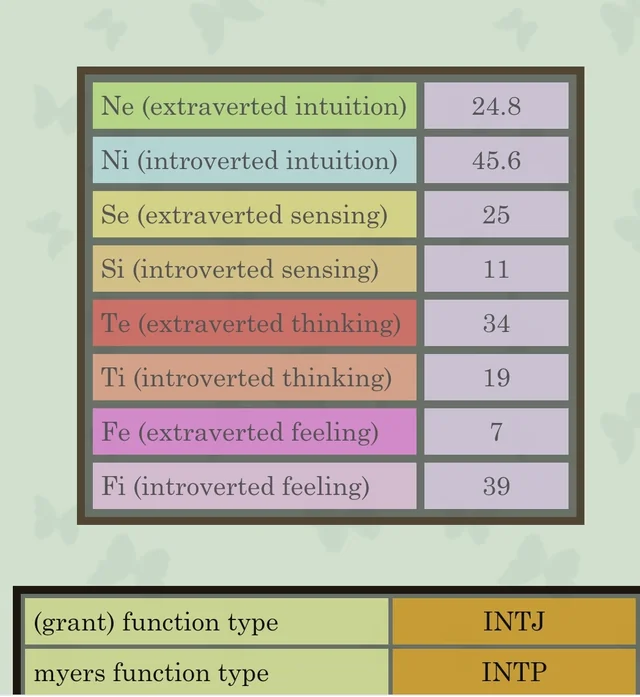
Sakinorva is popular because it does not only give one simple result. It usually gives several ways to interpret your personality type, which can be helpful but also confusing. Many people take the test and wonder why they received different results, such as one type based on cognitive functions and another type based on Myers letters.
| Test Name | Sakinorva MBTI / Cognitive Function Test |
|---|---|
| Main Focus | Cognitive functions and MBTI personality type |
| Common Results | Function scores, Grant function type, Myers letter type |
| Best For | People who want a deeper MBTI analysis beyond the four letters |
| Difficulty | Medium to advanced |
| Related Topics | MBTI test, 16 personalities, Jungian functions, personality type analysis |
What Is the Sakinorva MBTI Test?
The Sakinorva MBTI test is a personality test that focuses heavily on cognitive functions. Cognitive functions are a deeper part of MBTI theory that attempt to explain how people perceive information and make decisions.
Instead of only asking whether you are more introverted or extraverted, thinking or feeling, judging or perceiving, Sakinorva tries to measure the eight cognitive functions:
- Ti: Introverted Thinking
- Te: Extraverted Thinking
- Fi: Introverted Feeling
- Fe: Extraverted Feeling
- Ni: Introverted Intuition
- Ne: Extraverted Intuition
- Si: Introverted Sensing
- Se: Extraverted Sensing
Because of this, Sakinorva is often more complex than a basic MBTI test. It can be useful if you already know something about personality types and want to understand your function pattern more deeply.
Why Is Sakinorva Popular?
Sakinorva is popular because many MBTI fans feel that simple four-letter tests are too shallow. A basic test might tell you that you are INTP, ENFP, INFJ, or ESTJ, but it may not explain why your mind works that way.
Sakinorva gives more detailed data by showing your cognitive function scores. This allows users to compare which functions seem stronger or weaker. For example, someone might receive high scores in Ne and Ti, which could suggest ENTP or INTP patterns. Another person might score high in Fi and Ne, which could suggest INFP or ENFP patterns.
This makes the test attractive for people who want more than a quick personality label. However, it also means the results require more interpretation.
How Sakinorva MBTI Results Work
One reason people search for Sakinorva MBTI explanations is that the results can look confusing. Instead of giving only one personality type, Sakinorva may show different result sections.
These results may include:
- Cognitive function scores: Your scores for Ti, Te, Fi, Fe, Ni, Ne, Si, and Se.
- Grant function type: A type interpretation based on a cognitive function stack model.
- Myers letter type: A type interpretation based more closely on the four MBTI letter preferences.
- Possible alternative types: Types that may also fit depending on your function pattern.
This is why some users may see more than one possible type in their results. For example, someone may get INTP in one result area and ENTP or INFJ in another. This does not always mean the test is useless. It may mean that your answers show mixed traits or that the algorithm is interpreting your pattern in different ways.
Why Sakinorva May Give Different MBTI Types
Sakinorva can give different MBTI types because cognitive functions and letter-based MBTI are not always calculated the same way. A person may answer questions in a way that suggests one function pattern but another four-letter pattern.
For example, someone may score high in both introverted and extraverted functions. Another person may have strong values-based answers but also strong logical answers. In these cases, Sakinorva may show mixed or conflicting results.
Common reasons for different Sakinorva results include:
- Balanced personality traits: You may be close between two preferences.
- Developed secondary functions: You may use more than one function strongly.
- Stress or mood: Your answers may change depending on your current state.
- Self-perception bias: You may answer based on how you want to be rather than how you usually are.
- Different algorithms: Function-based and letter-based methods may interpret your answers differently.
For this reason, it is better to read Sakinorva as a personality exploration tool rather than as a perfect final answer.
How to Read Your Sakinorva Results
When reading your Sakinorva results, do not focus only on the final four-letter type. The most useful part is often the function score pattern.
Here is a simple way to read your result:
- Look at your highest cognitive function scores.
- Check whether your strongest functions match a known MBTI function stack.
- Compare your Grant function type and Myers letter type.
- If they disagree, read descriptions of both possible types.
- Ask which type better explains your long-term behavior, not just your mood today.
For example, if your highest functions are Ti and Ne, INTP or ENTP may be worth exploring. If your highest functions are Fi and Ne, INFP or ENFP may be possible. If your highest functions are Ni and Fe, INFJ may be worth considering.
Sakinorva Cognitive Functions Guide
To understand Sakinorva, it helps to know what each cognitive function means. These are simplified explanations:
| Function | Simple Meaning |
|---|---|
| Ti | Internal logic, precision, analysis, and understanding systems. |
| Te | External structure, efficiency, organization, and measurable results. |
| Fi | Personal values, authenticity, emotional truth, and inner conviction. |
| Fe | Social harmony, emotional atmosphere, support, and group awareness. |
| Ni | Future vision, hidden patterns, insight, and long-term meaning. |
| Ne | Possibilities, ideas, connections, curiosity, and creative exploration. |
| Si | Memory, routine, past experience, details, and personal stability. |
| Se | Present-moment awareness, action, sensory experience, and adaptability. |
These functions are not skills or fixed abilities. They are ways of processing information and making decisions. A high score may suggest that a function feels familiar to you, but it does not automatically prove your type.
Sakinorva vs a Simple Free MBTI Test
A simple free MBTI test usually gives you a quick result, such as INFP, ESTP, or INTJ. It is easier to understand and better for beginners. Sakinorva is usually more detailed, but also more difficult to interpret.
| Simple MBTI Test | Sakinorva MBTI Test |
|---|---|
| Easy for beginners | Better for deeper function analysis |
| Usually gives one main type | May give multiple result interpretations |
| Focuses on four letters | Focuses more on cognitive functions |
| Quick and simple | More detailed but more confusing |
If you are new to MBTI, it may be easier to start with a simple personality type test first. After that, Sakinorva can help you explore cognitive functions in more detail.
Is Sakinorva Accurate?
Sakinorva can be useful, but no MBTI test should be treated as perfectly accurate. Personality tests depend on self-reporting, and your answers can change depending on your mood, stress level, self-image, and understanding of the questions.
Sakinorva is especially useful for showing patterns. If your top functions clearly match one type, the result may feel accurate. If your scores are mixed, the test may show several possible types. In that case, the best approach is to compare the types and study their cognitive functions.
The most accurate MBTI typing usually comes from combining several things:
- Test results
- Long-term self-observation
- Cognitive function study
- Comparison with similar types
- Feedback from people who know you well
Common Sakinorva Result Confusion
Many people search for Sakinorva MBTI because they are confused by their results. Here are common situations:
Sakinorva says I am INTP, but another test says INFJ
This may happen if your answers show both analytical and intuitive traits. You should compare the function stacks. INTP usually focuses on Ti and Ne, while INFJ usually focuses on Ni and Fe.
Sakinorva gives me three different types
This can happen because the test uses different interpretations. Look at your highest functions first, then compare the suggested types.
My highest function does not match my expected type
This does not automatically mean your expected type is wrong. It may mean the question style favored one function, or that you are using a function strongly in your current life situation.
Should I trust Grant type or Myers type?
There is no perfect answer. If both results agree, that is useful. If they disagree, compare both types and focus on the function scores rather than blindly choosing one label.
Who Should Use Sakinorva?
Sakinorva is best for people who already know the basics of MBTI and want to explore cognitive functions. It is especially useful if you are trying to decide between similar types.
You may enjoy Sakinorva if you are interested in:
- Cognitive functions
- Jungian personality theory
- Type comparison
- Understanding why two MBTI tests give different results
- Exploring your possible dominant and auxiliary functions
If you only want a quick and simple result, a shorter MBTI test may be easier to start with.
How Sakinorva Connects to Character MBTI
Sakinorva can also help you understand fictional characters and celebrities through cognitive functions. For example, instead of only saying a character is ENTP, INFP, or INTJ, you can ask which functions they appear to use most often.
This is useful for Character MBTI analysis because many characters are typed differently by different fans. Looking at cognitive functions can help explain those disagreements.
- Tony Stark: often typed as ENTP because of Ne and Ti patterns.
- Spider-Man: often typed as ENFP because of Ne and Fi patterns.
- Doctor Strange: often typed as INTJ because of Ni and Te patterns.
- Wanda Maximoff: often typed as INFP because of Fi and Ne patterns.
- Frieren: often typed as INTP because of Ti and Ne patterns.
This makes Sakinorva-style function thinking useful not only for self-typing, but also for understanding fictional characters more deeply.
FAQ
What is Sakinorva MBTI?
Sakinorva MBTI usually refers to the Sakinorva cognitive function test, a personality test that measures Jungian cognitive functions and gives possible MBTI type interpretations.
Is Sakinorva a cognitive function test?
Yes. Sakinorva is commonly used as a cognitive function test because it gives scores for functions such as Ti, Te, Fi, Fe, Ni, Ne, Si, and Se.
Why does Sakinorva give different types?
Sakinorva may give different types because function-based results and letter-based results are calculated differently. Mixed scores, balanced traits, and self-perception bias can also create different outcomes.
Is Sakinorva more accurate than a normal MBTI test?
Sakinorva can be more detailed, but that does not mean it is always more accurate. It is best used as a deeper exploration tool, especially for people who already understand MBTI basics.
How should I read my Sakinorva results?
Start by looking at your highest cognitive function scores. Then compare the suggested types and read about their function stacks. Do not rely only on the final four-letter type.
Can Sakinorva tell my true MBTI type?
Sakinorva can suggest possible types, but your true type is better understood through long-term self-observation, type comparison, and cognitive function study.
Conclusion
The Sakinorva MBTI test is a useful tool for people who want to explore personality types beyond a simple four-letter result. Its biggest strength is that it shows cognitive function scores, which can help users understand why they may relate to certain types.
However, Sakinorva can also be confusing because it may show more than one possible type. Instead of treating the final result as absolute, it is better to use the test as a starting point for deeper MBTI exploration.
If you are new to MBTI, start with a simple free MBTI test first. If you already know your possible type and want to understand cognitive functions, Sakinorva can be a helpful second step.